 Chất xúc tác dòng Minslite để loại bỏ Ozone/CO/VOC
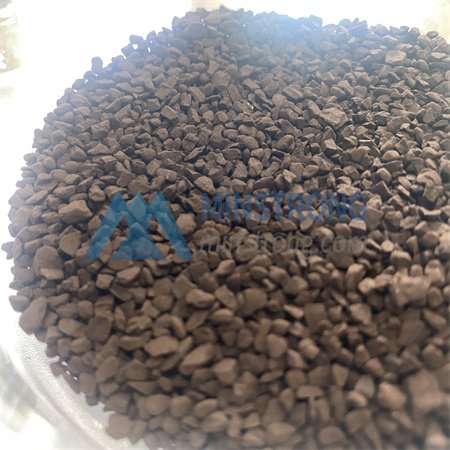
Tại sao hình thức của chất xúc tác phân hủy Ozone lại quan trọng?
Chức năng chính của chất xúc tác phân hủy ozone là đẩy nhanh quá trình chuyển đổi ozone (ồ3) thành oxy (ồ2), do đó làm giảm lượng ozone dư trong dòng khí được xử lý. Trong các ứng dụng thực tế, Tuy nhiên, dạng xúc tác ảnh hưởng nhiều hơn đến hoạt tính xúc tác. Nó cũng ảnh hưởng đến sự tiếp xúc khí-rắn, giảm áp suất, sử dụng chất xúc tác, cấu hình lò phản ứng, và yêu cầu bảo trì.
Vì thế, Việc lựa chọn chất xúc tác phân hủy ozone không nên chỉ dựa vào hoạt tính xúc tác của nó. Dạng xúc tác cũng phải phù hợp với lò phản ứng và điều kiện vận hành thực tế.
Chất xúc tác phân hủy ozone thường có sẵn trong dạng hạt, tổ ong, và dạng bột. Không có hình thức nào trong số này là vượt trội trên toàn cầu. Sự lựa chọn phù hợp phụ thuộc vào quy trình xử lý khí cụ thể và thiết kế thiết bị.
Chất xúc tác phân hủy Ozone dạng hạt: Một lựa chọn phổ biến cho hệ thống giường cố định
Chất xúc tác dạng hạt thuận tiện cho việc nạp và có thể được đóng gói trực tiếp vào lò phản ứng trên giường cố định, bình hình trụ, hộp mực, và các thiết bị lọc khí khác.
Xử lý khí công nghiệp, kích thước hạt ảnh hưởng đến hai thông số quan trọng: Hiệu suất tiếp xúc khí-rắn và giảm áp suất đáy. Nếu hạt quá lớn, diện tích bề mặt bên ngoài có sẵn trên một đơn vị thể tích có thể giảm, có khả năng làm giảm hiệu quả liên lạc. Nếu hạt quá nhỏ, áp suất giảm trên lớp xúc tác có thể tăng lên, trong khi rủi ro phát sinh bụi và mang hạt cũng có thể trở nên đáng kể hơn.
Vì lý do này, kích thước hạt trong hệ thống phân hủy ozone tầng cố định thường được chọn theo tốc độ dòng khí, chiều cao lớp xúc tác, diện tích mặt cắt lò phản ứng, và độ giảm áp suất cho phép.
Chất xúc tác dạng hạt đặc biệt thích hợp cho: hệ thống lọc khí cố định, điều kiện dòng khí tương đối ổn định, cấu hình lò phản ứng thông thường, và các ứng dụng tải chất xúc tác, dỡ hàng, thay thế, hoặc việc bổ sung cần phải đơn giản.
Chất xúc tác phân hủy Ozone tổ ong: Thích hợp cho các ứng dụng có dòng chảy cao và áp suất thấp
Chất xúc tác tổ ong chứa nhiều kênh song song cung cấp diện tích dòng khí lớn. Cấu trúc này cho phép khí đi qua chất xúc tác với khả năng cản dòng tương đối thấp khi lò phản ứng được thiết kế hợp lý..
Trong các hệ thống xử lý khí thải ozone lưu lượng cao, sự giảm áp suất của lớp hạt thông thường có thể trở thành một hạn chế thiết kế quan trọng khi tốc độ dòng khí tăng lên. Cấu trúc tổ ong có thể cung cấp diện tích dòng chảy mở lớn trong khi vẫn duy trì sức cản tương đối thấp, làm cho chúng phù hợp với dòng chảy cao, hệ thống vận hành liên tục trong đó độ giảm áp suất là thông số thiết kế quan trọng.
Tuy nhiên, chất xúc tác tổ ong không tự động tốt hơn chất xúc tác dạng hạt trong mọi ứng dụng. Its actual performance depends on factors such as channel dimensions, catalyst coating characteristics, phân phối khí, and reactor configuration. If the gas is unevenly distributed, some parts of the honeycomb structure may be underutilized even when the overall geometric flow area is large.
Vì thế, when honeycomb catalysts are used, gas distribution within the reactor is just as important as the catalyst structure itself.
Powder Ozone Decomposition Catalysts: High Dispersion for Research and Specialized Systems
Powder catalysts have small particle sizes and high dispersion, which can be advantageous for laboratory research, catalyst evaluation, and certain specialized reaction systems.
The small particle size can provide a relatively large external contact area, making powder catalysts useful for evaluating intrinsic catalytic performance. Tuy nhiên, directly using powders in industrial fixed-bed gas treatment systems requires careful consideration because fine particles can result in high flow resistance and may also create challenges related to particle entrainment, blockage, and catalyst recovery.
Vì thế, powder catalysts are generally more suitable for laboratory performance evaluation, slurry-based systems, or specially designed reactors rather than being directly substituted for granular fixed-bed catalysts.
Why Catalyst Form Should Not Be Selected Based Only on Catalytic Activity
In practical engineering applications, catalyst form should be evaluated together with several key operating parameters.
1. Gas Flow Rate
Gas flow rate determines the required catalyst volume, vận tốc khí, and effective flow area. High-flow systems generally place greater emphasis on pressure drop and gas distribution. In such cases, honeycomb structures or properly designed granular beds may be considered.
2. Ozone Concentration
Ozone concentration determines the reaction load placed on the catalyst. At higher ozone concentrations, catalyst capacity, sự ổn định lâu dài, and operating safety margins should be evaluated rather than relying solely on initial ozone removal efficiency.
3. Allowable Pressure Drop
Pressure drop is an important engineering parameter when fan capacity is limited or when gas must be transported over a long distance. Catalyst form, kích thước hạt, bed height, and reactor cross-sectional area should therefore be considered together during system design.
4. Temperature and Humidity
Temperature and moisture can influence ozone decomposition and the surface condition of the catalyst. Đặc biệt, high humidity may affect the availability of active surface sites by introducing competitive adsorption effects. Catalyst selection should therefore be based on actual operating temperature and humidity rather than standard dry-gas test conditions alone.
5. Catalyst Replacement and Maintenance
If the catalyst needs to be replaced periodically, loading and unloading procedures should be considered during the initial design stage. Granular catalysts are generally convenient for conventional fixed-bed loading and unloading, while honeycomb catalysts may require a suitable modular installation structure.
How to Quickly Select the Appropriate Catalyst Form
A simple engineering approach can be used for preliminary selection:
- Fixed-bed gas purification: evaluate granular catalysts first.
- High gas flow and strict pressure-drop requirements: give priority to evaluating honeycomb catalysts.
- Laboratory research or specialized dispersion systems: consider powder catalysts.
This approach is only a preliminary screening method. Final selection should still consider ozone concentration, tốc độ dòng khí, nhiệt độ, độ ẩm, giảm áp suất cho phép, reactor dimensions, and the required outlet ozone concentration.
The Right Choice Is a Match Between Catalyst, Reactor, and Operating Conditions
The selection of an ozone decomposition catalyst form is not simply a comparison of which is more active among granular, tổ ong, and powder catalysts. The more important question is which catalyst form can provide effective gas-solid contact, acceptable pressure drop, and stable long-term operation under the actual process conditions.
Đối với các ứng dụng công nghiệp, the recommended approach is to first determine the gas flow rate and ozone concentration, then select a suitable catalyst form based on allowable pressure drop and available reactor space. Cuối cùng, the catalyst should be validated under representative operating conditions to confirm ozone decomposition efficiency and long-term stability.
Nói cách khác, the most suitable ozone decomposition catalyst is not necessarily the catalyst with the highest laboratory activity. It is the catalyst that achieves an appropriate balance among reaction efficiency, giảm áp suất, sức mạnh cơ học, loading method, and service life under the target operating conditions.
tác giả:kaka
ngày:2026/8/25
WeChat
Quét mã QR bằng WeChat