 Катализаторҳои силсилаи Minslite барои бартараф кардани озон/CO/VOC
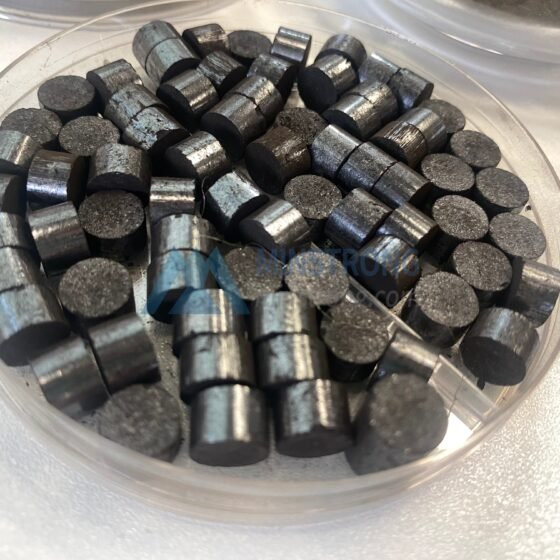
VOC catalyst
What Is Ethylene Oxide and Why Does Its Off-Gas Require Attention?
Ethylene oxide is an organic compound with a cyclic ether structure. Its epoxide group has relatively high chemical reactivity, allowing EO to participate in a wide range of chemical reactions. This chemical property contributes to its industrial value, but it also means that EO must be carefully controlled during production and use.
In industrial systems involving EO, off-gas may be generated depending on the process, equipment configuration, and exhaust collection method. The EO concentration in the off-gas is not necessarily constant. Меъёри ҷараёни газ, ҳарорат, намӣ, and other coexisting components may also change with operating conditions. Дар натиҷа, EO off-gas treatment should not be designed based solely on the contaminant itself. The complete gas composition and operating conditions need to be evaluated.
What Are the Main Risks Associated with Ethylene Oxide Off-Gas?
Health risk is one of the key reasons why EO emissions need to be controlled. Ethylene oxide has toxic and irritating properties, and exposure to sufficiently high concentrations or prolonged exposure may adversely affect human health. In industrial environments where EO is handled, measures such as process enclosure, ventilation, gas collection, and off-gas treatment can help reduce the potential for personnel exposure.
In addition to health concerns, ethylene oxide is flammable and highly reactive. Changes in EO concentration, ҳарорат, oxygen content, and equipment operating conditions can affect the overall safety risk of an off-gas system. Бинобар ин, an EO treatment system should not be evaluated solely according to its removal efficiency. Gas concentration fluctuations, reaction temperature, gas flow conditions, and safety controls under abnormal operating conditions should also be considered.
From an environmental perspective, untreated EO released into the atmosphere can result in unnecessary emissions. Off-gas treatment therefore serves not only to improve the working environment but also to reduce the amount of EO released into the surrounding environment and provide better control over industrial emissions.
Why Are Dilution and Conventional Adsorption Not Always Sufficient?
For industrial off-gas, dilution does not actually remove ethylene oxide. It only reduces the concentration of EO per unit volume. If the total amount of contaminant remains essentially unchanged, dilution alone does not fundamentally solve the emission problem. For continuous industrial operations, treatment methods that can actually reduce the contaminant load should therefore be considered.
Adsorption technology can capture EO using an adsorbent and may be suitable under certain operating conditions. Аммо, adsorption capacity can be affected by temperature, намӣ, inlet concentration, and adsorbent properties. Once the adsorbent approaches saturation, replacement, барқароршавӣ, or subsequent treatment may also need to be considered.
Бинобар ин, relying solely on adsorption may not always be appropriate for continuously generated EO off-gas. The treatment approach should be selected according to the actual gas characteristics, шароити кор, required treatment capacity, and expected operating period.
How Does Catalytic Oxidation Treat Ethylene Oxide Off-Gas?
For EO off-gas streams that are suitable for catalytic oxidation, ethylene oxide can be chemically converted into more stable products through a catalytic reaction. Under appropriate reaction conditions, a catalyst can lower the activation energy of the oxidation reaction, making it easier for EO to undergo oxidation and ultimately converting it primarily into гази карбон ва об.
Unlike simple adsorption, the fundamental mechanism of catalytic oxidation is chemical conversion of EO rather than merely transferring EO to another medium. Бинобар ин, for continuously generated EO off-gas with suitable concentrations and operating conditions, catalytic oxidation can be an important treatment approach.
Аммо, catalytic oxidation should not be considered suitable for every EO off-gas stream without evaluating the actual operating conditions. Treatment performance can be affected by EO inlet concentration, суръати ҷараёни газ, reaction temperature, намӣ, oxygen content, and other coexisting substances. If the off-gas contains components that may inhibit or deactivate the catalyst, these factors should also be evaluated during system design.
Дар натича, catalyst activity is only one component of the overall EO treatment performance. Appropriate equipment design, шароити реаксия, and process matching are equally important.
What Parameters Should Be Considered When Selecting an EO Off-Gas Treatment System?
EO inlet concentration and off-gas flow rate are two of the most important basic parameters for designing an EO treatment system. EO concentration determines the contaminant loading, while gas flow rate directly affects the required treatment capacity and gas residence time within the treatment equipment. These two parameters should be evaluated together when determining system capacity and operating conditions.
Other important parameters include gas temperature, намӣ, фишор, and coexisting components. Temperature affects the catalytic reaction rate, while humidity can influence certain adsorption and catalytic processes. Дигар пайвастагиҳои органикӣ, моддаҳои заррача, or specific chemical components may also affect the operating condition and long-term stability of the treatment system.
Дар Илова, the target emission concentration, continuous operating period, паст шудани фишор, equipment safety requirements, and maintenance interval should be considered. For industrial EO off-gas treatment, a technically appropriate solution should not focus on a single performance indicator. Ба ҷои ин, it should achieve an overall match between the off-gas characteristics, treatment technology, катализатор, and equipment design.
The Key to EO Off-Gas Treatment Is Risk Control and Process Matching
The need to treat ethylene oxide off-gas is not based solely on its classification as an organic pollutant. EO also has relatively high chemical reactivity and presents potential health and safety risks. Effective off-gas control should therefore begin with a clear understanding of EO concentration and exhaust flow rate, followed by evaluation of temperature, намӣ, coexisting components, and operating conditions to determine the appropriate treatment technology.
For EO off-gas streams suitable for catalytic oxidation, converting EO into carbon dioxide and water through a catalytic reaction can provide a practical approach to contaminant removal. Аммо, the final treatment performance depends on the combined matching of the catalyst, шароити реаксия, and equipment system. Дар барномаҳои воқеии саноатӣ, EO off-gas treatment should therefore be selected and designed based on complete process data rather than relying on a single catalyst performance parameter.
муаллиф:кака
сана:2026/9/7
WeChat
Коди QR-ро бо WeChat скан кунед