 Katalysatorer i Minslite-serien för avlägsnande av ozon/CO/VOC
På grund av dess höga koncentrationer av eldfasta organiska föreningar och kvarvarande antibiotika, farmaceutiskt avloppsvatten uppvisar låg effektivitet och risk för systemkollaps under direkt biokemisk rening. Katalytisk ozoneringsteknik kan effektivt generera hydroxylradikaler vid omgivningstemperaturer och nästan neutralt pH; det bryter ned föroreningar icke-selektivt och förbättrar avloppsvattnets biologiska nedbrytbarhet avsevärt. Denna teknik har redan uppnått framgångsrika ingenjörstillämpningar över många läkemedelsproduktionsbaser i Kina. Denna artikel analyserar den mekanistiska grunden för denna teknologis lämplighet såväl som dess omfattande fördelar.
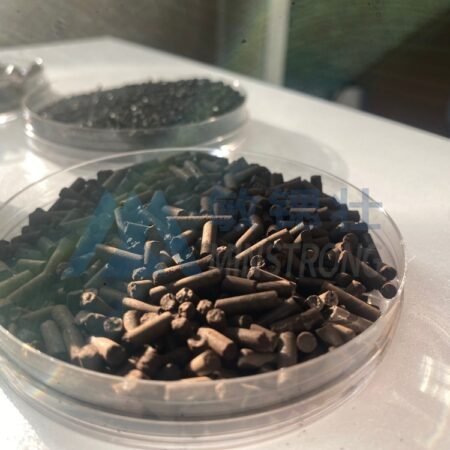
Ozonnedbrytningskatalysator
jag. Källor och behandlingsutmaningar för farmaceutiskt avloppsvatten
Farmaceutiskt avloppsvatten härrör huvudsakligen från aktiv farmaceutisk ingrediens (API) produktion, inklusive jäsningsfiltrat, extraktionsrester, destillationsbottnar, och rengöringsvatten för utrustning. Vattenkvaliteten varierar avsevärt mellan olika avloppsvattentyper: avloppsvatten från produktion av antibiotika har vanligtvis ett kemiskt syrebehov (TORSK) på 5 000–20 000 mg/L och suspenderade fasta ämnen på 5 000–23 000 mg/L; kemisk syntes läkemedelsavloppsvatten innehåller giftiga ämnen som nitroföreningar, aniliner, och tungmetaller; traditionell kinesisk medicin (TCM) produktionsavloppsvatten transporterar stora mängder eldfasta naturliga organiska föreningar, såsom tanniner, ligniner, och alkaloider.
Även vid koncentrationer så låga som mikrogram per liter, kvarvarande antibiotika kan hämma mikrobiell metabolism och få biokemiska behandlingssystem att kollapsa. Dessutom, klorerade organiska ämnen och polycykliska aromatiska kolväten (PAH) ha “tre cancerframkallande” effekter (carcinogen, mutagen, teratogena) och kvarstår i vattendrag. Därför, vi måste tillämpa effektiv förbehandling före biokemisk bearbetning för att eliminera biologisk toxicitet och förbättra biologisk nedbrytbarhet.
II. Ozonkatalysatorernas kärnmekanism
Ozonkatalysatorer använder övergångsmetalloxider (till exempel, mangan, koppar, järn) som aktiva komponenter och stöder dem på bärare med stor yta som aluminiumoxid eller keramik. När ozonströmmen strömmar genom katalysatorbädden, aktiva platser på katalysatorytan adsorberar och aktiverar ozonmolekyler, underlättar deras klyvning för att producera hydroxylradikaler (·ÅH).
Med en oxidationspotential så hög som 2.80 V, Hydroxylradikaler reagerar icke-selektivt och snabbt med de flesta organiska föroreningar. De klyver mättade bindningar och öppna aromatiska ringar, bryta stora organiska molekyler till mindre mellanprodukter, som sedan genomgår ytterligare mineralisering. Katalysatorn förbrukar inte sig själv under processen; den fungerar effektivt vid neutralt pH (5–8), behöver inga kemiska tillsatser, och förhindrar sekundär förorening.
III. Varför det är särskilt lämpligt för farmaceutisk förbehandling av avloppsvatten
1. Snabb eliminering av antibiotika bakteriostatisk aktivitet
Hydroxylradikaler attackerar snabbt de aktiva funktionella grupperna av antibiotika (till exempel, β‑laktamring och tetracyklinskelett), orsakar ringöppning och bindningsklyvning, därigenom helt eliminerar deras bakteriostatiska förmåga. Studier visar att när vi använder en manganbaserad katalysator för att behandla oxytetracyklinhaltigt simulerat avloppsvatten, antibiotikumavlägsnandet överstiger 96% inom 30 minuter; dessutom, de resulterande nedbrytningsprodukterna hämmar inte längre efterföljande biokemisk behandling.
2. Effektiv nedbrytning av motsträviga organiska föroreningar
Aromatiska och heterocykliska föreningar motstår ofta konventionell ozonering, med ozonutnyttjandegrader vanligtvis lägre 50%. Katalysatorn förskjuter reaktionen mot en radikaldominerad, icke-selektiv oxidationsprocess, accelererar nedbrytningshastigheten med flera till tio gånger. Till exempel, när vi tillämpar katalytisk oxidation på ett kemiskt syntetiserat farmaceutiskt avloppsvatten (COD ≈ 8,000 mg/L), COD-avlägsningsgraden når 45–55 %, medan konventionell ozonering ensam uppnår mindre än 20%.
3. Betydande förbättring av biologisk nedbrytbarhet
Stor, motsträviga organiska molekyler bryts ner till mindre ämnen – organiska syror, aldehyder, och alkoholer – vilket ökar B/C-förhållandet (BOD/KOD) från ett initialt 0,1–0,2 till 0,3–0,5 eller högre, ibland upp till 0.6. Följaktligen, efterföljande biokemisk behandling kräver 30 %–50 % mindre hydraulisk retentionstid och förbrukar 20 %–30 % mindre luftningsenergi.
4. Anpassningsförmåga till fluktuationer i vattenkvalitet och flödeshastighet
Genom att justera ozondoseringen (30–120 mg/L) och retentionstid (30–120 minuter), systemet kan flexibelt anpassas till varierande föroreningsbelastningar; dessutom, katalysatorskiktet med fast bädd ger betydande buffringskapacitet.
IV. Fördelar jämfört med traditionell förbehandlingsteknik
Jämfört med Fenton-oxidationsmetoden – en vanlig teknik vid förbehandling av avloppsvatten – visar katalytisk ozonering tydliga fördelar i flera aspekter. Angående sekundära föroreningar, Fentonoxidation kräver tillsats av järnsulfat och väteperoxid under starkt sura förhållanden. Reaktionen ger stora mängder järnhaltigt slam - ca 1 till 3 kg per ton avloppsvatten – som vi klassar som farligt avfall och måste omhändertas till hög kostnad. Däremot, katalytisk ozonering kräver inga kemiska tillsatser; dess fasta katalysator är återanvändbar, och den enda biprodukten är syre. Eftersom hela processen inte genererar något kemiskt slam, den undviker i grunden sekundära föroreningar.
När det gäller reaktionsförhållanden, Fentonoxidation kräver att vi justerar avloppsvattnets pH till ett starkt surt område (2–4) och tillsätt sedan bas efter reaktionen för att återställa neutraliteten. Detta förbrukar stora mängder syror och baser och försvårar driften. Katalytisk ozonering, dock, kan arbeta direkt vid omgivningstemperatur och nästan neutralt pH (5–8) av råavloppsvatten, utan syra- eller basjusteringar. Detta tillvägagångssätt sparar kemikaliekostnader och förenklar det övergripande arbetsflödet.
Angående operativ ledning, Fentonoxidation kräver manuell, periodisk beredning och dosering av olika reagenser – en komplex procedur med inneboende säkerhetsrisker. Omvänt, katalytiska ozoniseringssystem kan vara mycket automatiserade; vi kan integrera dem med en PLC för online-övervakning av vattenkvalitet i realtid och automatisk ozonjustering. Hela processen går självständigt, minskar behovet av personal på plats och underlättar bekväm hantering.
När det gäller driftskostnader – med ett exempel på en anläggning för reningsverk för farmaceutiskt avloppsvatten på 500 ton per dag – genererar Fenton-processen ca. 180 ton järnhaltigt farligt avfall årligen. Enbart avgifterna för hantering av farligt avfall överstiger 150,000 RMB; kombinerat med syra, bas, och andra reagenskostnader, den direkta driftskostnaden per ton avloppsvatten uppgår till ca 4.5 RMB. För katalytisk ozonering, elförbrukning (främst för ozongeneratorn) kostar ca 2.8 RMB per ton, medan den årliga amorterade kostnaden för utarmning av katalysator är ungefär 0.4 RMB per ton. Utan kostnader för reagens eller farligt avfall, den totala driftskostnaden per ton är ca 3.2 RMB - nästan 30% lägre än Fenton-processen. Dessutom, Högkvalitativa ozonkatalysatorer kan förbli effektiva i över två år under rimliga driftsförhållanden; om deras aktivitet avtar, vi kan återställa mycket av deras ursprungliga effektivitet genom offline termisk regenerering, ytterligare förlänga livslängden och minska ersättningskostnaderna.
Sammanfattningsvis, Katalytisk ozonering överträffar avsevärt den traditionella Fenton-oxidationsprocessen vad gäller miljöfördelar, ekonomisk effektivitet, och operativ bekvämlighet.
V. Ingenjörspraktik och sammanfattning
Omfattande ingenjörspraktik visar att katalytisk ozonering, när vi tillämpar det på läkemedelsförbehandling av avloppsvatten, kan uppnå en COD-borttagningshastighet på 40% till 60%. Dessutom, denna process kräver ingen pH-justering och genererar inget kemiskt slam, möjliggör förlängd stabil systemdrift. Den grundläggande motiveringen för att välja katalytisk ozonering för läkemedelsförbehandling av avloppsvatten ligger i dess förmåga att samtidigt uppnå tre huvudmål: minskar COD, eliminerar antibakteriell aktivitet mot antibiotika, och avsevärt förbättra den biologiska nedbrytbarheten – allt utan sekundär förorening och med kontrollerbara driftskostnader. För läkemedelsföretag som står inför regulatoriska mandat att uppgradera sina miljöskyddsstandarder, katalytisk ozonering representerar en tekniskt och ekonomiskt sund förbehandlingsväg som verkliga tekniska tillämpningar har noggrant validerat.
författare: Gloria
datum:2026/5/13
WeChat
Skanna QR-koden med WeChat