 Катализаторы серии Minslite для удаления озона/CO/ЛОС
Катализаторы диоксида марганца являются основными вспомогательными материалами в аккумуляторной промышленности., widely used in key stages such as cathode material preparation, electrolyte synthesis, and production exhaust gas treatment. Their performance directly determines the quality control, production efficiency, and overall performance of battery products. Faced with different specifications of manganese dioxide catalysts and high-purity active manganese dioxide catalysts, how should battery manufacturers and R&D personnel select products to match their production processes and solidify product quality? This has become a core pain point in product selection within the industry.
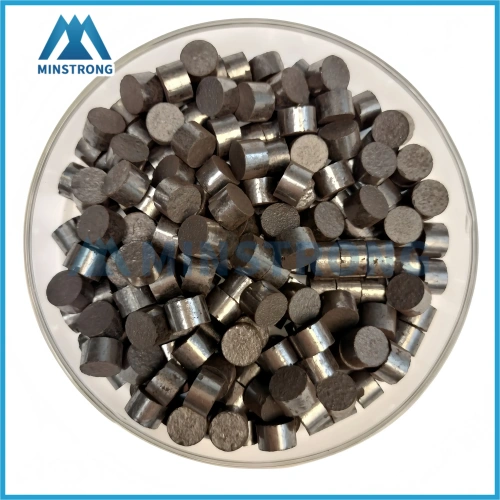
Диоксид марганца
When selecting manganese dioxide catalysts for the battery industry, purity and impurity control are paramount.
Battery production places stringent requirements on the purity of catalytic materials. If the catalyst contains impurities such as heavy metals or alkali metals, it can lead to increased battery self-discharge rate, shortened cycle life, and quality control issues. In practice, it is essential to request suppliers to provide formal purity testing reports, focusing on verifying the content of key impurities, and prioritizing high-purity, highly active manganese dioxide catalysts.
Catalytic activity and process compatibility are crucial for high-efficiency production.
Different battery production processes have different catalytic reaction requirements. Insufficient catalyst activity will slow down the reaction rate, and incompatibility with the process can easily lead to side reactions, reducing production efficiency. In practice, it is recommended to select a battery-specific manganese dioxide catalyst based on the specific processes such as cathode preparation and electrolyte synthesis, and request suppliers to provide measured catalytic efficiency data suitable for the process.
Chemical stability and operating condition compatibility directly affect production stability.
The reaction system in battery production involves changes in acidity, alkaliness, and temperature. If the catalyst has poor stability, it is prone to deactivation and dissolution, leading to fluctuations in the production process and frequent catalyst replacements. In practice, it is necessary to verify the stability test data of the catalyst under battery production conditions, paying attention to its acid and alkali resistance and anti-dissolution characteristics to ensure long-term stable activity.
Particle size and dispersibility must meet the requirements of refined battery production.
Battery materials require a high degree of refinement. If the catalyst particle size is uneven or the dispersibility is poor, it will lead to incomplete catalytic reactions, thus affecting the consistency of battery material performance. In practice, it is necessary to request the supplier to provide a particle size distribution test report and select catalytic-grade manganese dioxide for battery production with uniform particle size and good dispersibility, adapting to the refined production process.
The core of manganese dioxide catalyst selection in the battery industry is “process adaptation as the foundation, purity and activity as the core, and refined stability as the basis.” Combining the specific production processes and quality control requirements of lithium batteries and power batteries, selecting products with battery industry application cases and the ability to provide customized selection suggestions is crucial for more efficient production and more stable product quality, laying a solid foundation for improving the quality and efficiency of battery production.
Author: Hazel
Date: 2026-03-25
Вичат
Сканируйте QR-код с помощью WeChat