

Product Introduction
- Ozone catalyst technology is an advanced oxidation process based on ozone. It combines the strong oxidizing properties of ozone with the adsorption and catalytic properties of the catalyst, and be proved more effectively solving the problem of low ozone treatment efficiency, low ozone utilization, high operating costs, and incomplete degradation of organics questions.
- The phase state of the ozone catalytic oxidation catalyst is divided into homogeneous catalytic ozonation and heterogeneous catalytic ozonation. In the homogeneous catalytic ozonation technology, the catalyst is uniformly distributed and has high catalytic activity, the mechanism of action is clear, and it is easy to study and grasp. However, its shortcomings are also obvious. The catalyst is miscible in water, causing it to be easily lost, difficult to recycle, and cause secondary pollution. The operating cost is high and the water treatment cost is increased. The heterogeneous catalytic ozonation method uses a solid catalyst to accelerate the oxidation reaction in the liquid phase (or gas phase) under normal pressure. The catalyst exists in a solid state, is insoluble in water, does not run off, has no secondary pollution, and reduces the operating cost of catalytic oxidation.
- The ozone catalytic oxidation method of wastewater is a large-scale advanced oxidation technology, which is mainly realized through two ways of direct oxidation and catalytic oxidation. Ozone can directly mineralize the large molecules, long chains, and difficult-to-biodegradable organic matter remaining in the wastewater into carbon dioxide and water, and partially decompose into small molecules and easily biodegradable substances, destroy the structure of non-biodegradable organic matter, reduce toxicity, and increase B/ C ratio, so as to ensure the treatment effect of subsequent biochemical methods. The traditional ozone oxidation technology is mainly direct oxidation, which has poor mass transfer effect, low ozone utilization rate, and high investment and operating costs.
Product Features
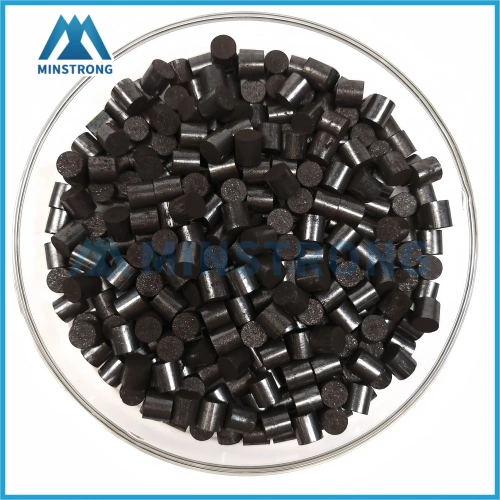
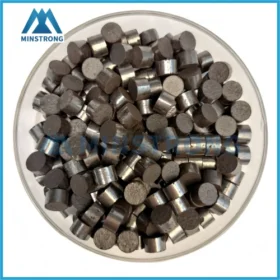
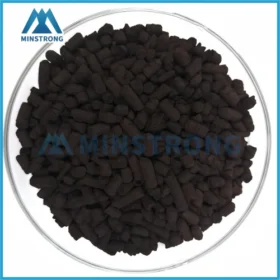
- Minstrong catalyst has good strength, and the average crushing strength is 60-200N/cm;
- The specific surface area is high, with a specific surface area greater than 200m2/g, and a large number of microporous structures are distributed inside the catalyst, which can effectively absorb ozone and carry out catalytic decomposition;
- Minstrong catalyst is resistant to high temperature and does not contain flammable and volatile components. When dealing with high-concentration ozone, there is no risk of combustion and no secondary pollution;
- The content of active ingredients is high, the content of catalyst active ingredients is as high as more than 85%, the performance is stable, the life is long, and it is not easy to lose;
- The raw materials and production process of the catalyst production are completely independent and controllable, and can be supplied stably.
Applications
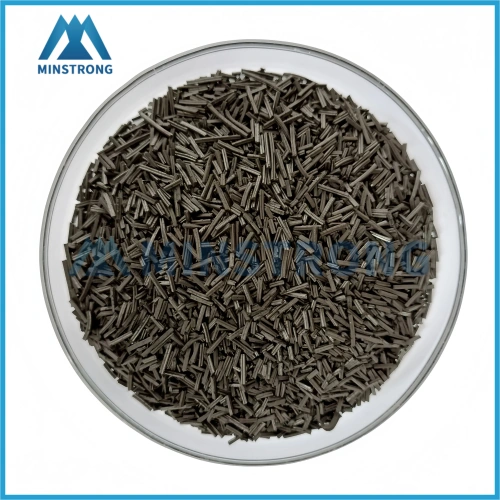
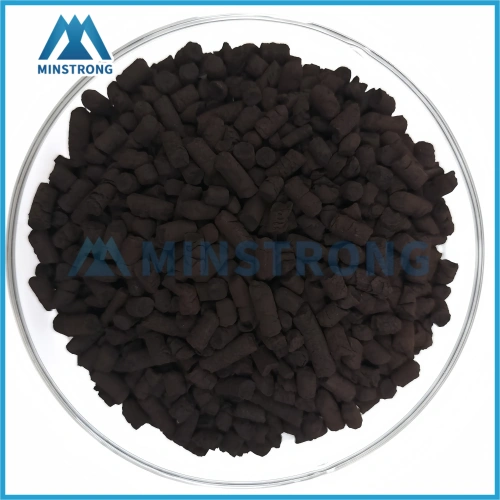
- Performance Parameters Of Ozone Catalyst For Sewage And Wastewater Treatment
WeChat
Scan the QR Code with WeChat