 Pemangkin Siri Minslite untuk Penyingkiran Ozon/CO/VOC
Disebabkan kepekatan tinggi sebatian organik refraktori dan antibiotik sisa, air sisa farmaseutikal mempamerkan kecekapan rendah dan risiko keruntuhan sistem di bawah rawatan biokimia langsung. Teknologi pengozonan pemangkin boleh menjana radikal hidroksil dengan cekap pada suhu ambien dan pH hampir neutral; ia merendahkan bahan pencemar secara tidak selektif dan meningkatkan kebolehbiodegradan air sisa dengan ketara. Teknologi ini telah mencapai aplikasi kejuruteraan yang berjaya merentasi banyak pangkalan pengeluaran farmaseutikal di China. Artikel ini menganalisis asas mekanistik untuk kesesuaian teknologi ini serta kelebihan komprehensifnya.
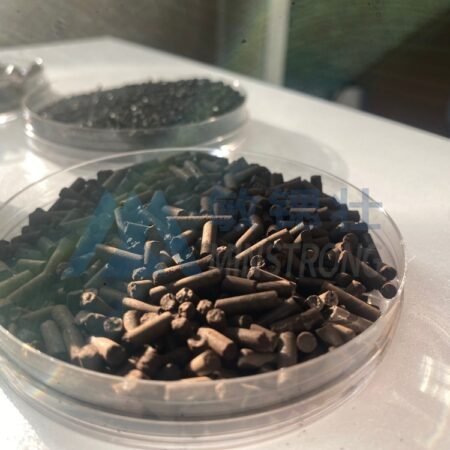
Pemangkin penguraian ozon
saya. Sumber dan Cabaran Rawatan Air Sisa Farmaseutikal
Air sisa farmaseutikal terutamanya berasal daripada bahan farmaseutikal aktif (API) pengeluaran, termasuk penapisan penapaian, sisa pengekstrakan, bahagian bawah penyulingan, dan air pembersih peralatan. Kualiti air berbeza dengan ketara merentas jenis air sisa yang berbeza: air sisa pengeluaran antibiotik biasanya mempunyai Permintaan Oksigen Kimia (COD) 5,000–20,000 mg/L dan pepejal terampai 5,000–23,000 mg/L; sintesis kimia air sisa farmaseutikal mengandungi bahan toksik seperti sebatian nitro, anilin, dan logam berat; perubatan tradisional Cina (TCM) air sisa pengeluaran membawa sejumlah besar sebatian organik semula jadi refraktori, seperti tanin, lignin, dan alkaloid.
Walaupun pada kepekatan serendah mikrogram seliter, antibiotik sisa boleh menghalang metabolisme mikrob dan menyebabkan sistem rawatan biokimia runtuh. Lebih-lebih lagi, organik berklorin dan hidrokarbon aromatik polisiklik (PAH) mempunyai “tiga karsinogenik” kesan (karsinogenik, mutagenik, teratogenik) dan kekal dalam badan air. Oleh itu, kita mesti menggunakan prarawatan yang berkesan sebelum pemprosesan biokimia untuk menghapuskan ketoksikan biologi dan meningkatkan biodegradasi.
II. Mekanisme Teras Pemangkin Ozon
Pemangkin ozon menggunakan oksida logam peralihan (cth., mangan, tembaga, besi) sebagai komponen aktif dan menyokongnya pada pembawa kawasan permukaan tinggi seperti alumina atau seramik. Semasa aliran ozon mengalir melalui dasar mangkin, tapak aktif pada permukaan mangkin menyerap dan mengaktifkan molekul ozon, memudahkan pembelahan mereka untuk menghasilkan radikal hidroksil (·OH).
Dengan potensi pengoksidaan setinggi 2.80 V, radikal hidroksil bertindak balas secara tidak selektif dan pantas dengan kebanyakan bahan pencemar organik. Mereka membelah ikatan tepu dan membuka cincin aromatik, memecahkan molekul organik yang besar kepada perantaraan yang lebih kecil, yang kemudiannya menjalani mineralisasi selanjutnya. Pemangkin tidak memakan dirinya semasa proses; ia beroperasi dengan cekap pada pH neutral (5–8), tidak memerlukan bahan tambahan kimia, dan menghalang pencemaran sekunder.
III. Mengapa Ia Sangat Sesuai untuk Prarawatan Air Sisa Farmaseutikal
1. Penghapusan Cepat Aktiviti Bakteriostatik Antibiotik
Radikal hidroksil dengan cepat menyerang kumpulan berfungsi aktif antibiotik (cth., cincin β-laktam dan rangka tetrasiklin), menyebabkan pembukaan cincin dan belahan ikatan, dengan itu menghapuskan sepenuhnya keupayaan bakteriostatik mereka. Kajian menunjukkan bahawa apabila kita menggunakan mangkin berasaskan mangan untuk merawat air sisa simulasi yang mengandungi oxytetracycline, kadar penyingkiran antibiotik melebihi 96% dalam 30 minit; tambahan pula, produk degradasi yang terhasil tidak lagi menghalang rawatan biokimia seterusnya.
2. Degradasi Cekap Pencemar Organik Recalcitrant
Sebatian aromatik dan heterosiklik sering menentang pengozonan konvensional, dengan kadar penggunaan ozon biasanya di bawah 50%. Pemangkin mengalihkan tindak balas ke arah yang dikuasai radikal, proses pengoksidaan bukan selektif, mempercepatkan kadar degradasi dengan beberapa kali ganda hingga berpuluh kali ganda. Contohnya, apabila kita menggunakan pengoksidaan pemangkin pada air sisa farmaseutikal yang disintesis secara kimia (COD ≈ 8,000 mg/L), kadar penyingkiran COD mencapai 45%–55%, manakala ozonasi konvensional sahaja mencapai kurang daripada 20%.
3. Peningkatan Ketara dalam Kebolehbiodegradasian
besar, molekul organik yang keras hati terurai kepada bahan yang lebih kecil—asid organik, aldehid, dan alkohol—meningkatkan nisbah B/C (BOD/KOD) daripada 0.1–0.2 awal hingga 0.3–0.5 atau lebih tinggi, kadang-kadang sampai 0.6. Akibatnya, rawatan biokimia seterusnya memerlukan 30%–50% kurang masa pengekalan hidraulik dan menggunakan 20%–30% kurang tenaga pengudaraan.
4. Kebolehsuaian kepada Turun Naik dalam Kualiti Air dan Kadar Aliran
Dengan melaraskan dos ozon (30–120 mg/L) dan masa pengekalan (30–120 minit), sistem boleh menyesuaikan secara fleksibel kepada beban pencemar yang berbeza-beza; tambahan pula, lapisan pemangkin katil tetap menyediakan kapasiti penimbal yang besar.
IV. Kelebihan Daripada Teknologi Prarawatan Tradisional
Berbanding dengan kaedah pengoksidaan Fenton—teknik biasa dalam prarawatan air sisa farmaseutikal—pengozonan pemangkin menunjukkan kelebihan yang berbeza dalam pelbagai aspek. Mengenai pencemaran sekunder, Pengoksidaan Fenton memerlukan penambahan ferus sulfat dan hidrogen peroksida dalam keadaan berasid kuat. Tindak balas menghasilkan sejumlah besar enap cemar yang mengandungi besi—kira-kira 1 kepada 3 kg setiap tan air sisa—yang kami klasifikasikan sebagai sisa berbahaya dan mesti dilupuskan dengan kos yang tinggi. Sebaliknya, pengozonan pemangkin tidak memerlukan bahan tambahan kimia; mangkin pepejalnya boleh diguna semula, dan satu-satunya hasil sampingan ialah oksigen. Oleh kerana keseluruhan proses tidak menghasilkan enap cemar kimia, ia pada asasnya mengelakkan pencemaran sekunder.
Dari segi keadaan tindak balas, Pengoksidaan Fenton memerlukan kita melaraskan pH air sisa kepada julat yang sangat berasid (2–4) dan kemudian tambah bes selepas tindak balas untuk memulihkan neutraliti. Ini menggunakan kuantiti asid dan bes yang banyak dan menyukarkan operasi. Pengozonan pemangkin, walau bagaimanapun, boleh beroperasi secara langsung pada suhu ambien dan pH hampir neutral (5–8) daripada air sisa mentah, tanpa pelarasan asid atau bes. Pendekatan ini menjimatkan kos kimia dan memudahkan aliran kerja keseluruhan.
Berkenaan pengurusan operasi, Pengoksidaan Fenton memerlukan manual, penyediaan berkala dan dos pelbagai reagen—suatu prosedur yang kompleks dengan risiko keselamatan yang wujud. Sebaliknya, sistem ozonisasi pemangkin boleh menjadi sangat automatik; kami boleh mengintegrasikannya dengan PLC untuk pemantauan kualiti air dalam talian masa nyata dan pelarasan output ozon automatik. Keseluruhan proses berjalan secara autonomi, mengurangkan keperluan untuk kakitangan di tapak dan memudahkan pengurusan yang mudah.
Berkenaan kos operasi—mengambil kemudahan rawatan air sisa farmaseutikal 500 tan sehari sebagai contoh—proses Fenton menjana kira-kira 180 tan sisa berbahaya yang mengandungi besi setiap tahun. Bayaran pelupusan sisa berbahaya sahaja melebihi 150,000 RMB; digabungkan dengan asid, asas, dan kos reagen lain, kos operasi langsung bagi setiap tan air sisa berjumlah lebih kurang 4.5 RMB. Untuk ozonisasi pemangkin, penggunaan elektrik (terutamanya untuk penjana ozon) kos kira-kira 2.8 RMB setiap tan, manakala kos penyusutan pemangkin terlunas tahunan adalah secara kasar 0.4 RMB setiap tan. Tanpa reagen atau kos pelupusan sisa berbahaya, jumlah kos operasi setiap tan adalah kira-kira 3.2 RMB—hampir 30% lebih rendah daripada proses Fenton. Tambahan pula, pemangkin ozon berkualiti tinggi boleh kekal berkesan selama lebih dua tahun di bawah keadaan operasi yang munasabah; jika aktiviti mereka merosot, kita boleh memulihkan kebanyakan keberkesanan asalnya melalui penjanaan semula haba luar talian, memanjangkan lagi hayat perkhidmatan dan mengurangkan kos penggantian.
Secara ringkasnya, pengozonan pemangkin dengan ketara mengatasi proses pengoksidaan Fenton tradisional dalam faedah alam sekitar, kecekapan ekonomi, dan kemudahan operasi.
V. Amalan Kejuruteraan dan Ringkasan
Amalan kejuruteraan yang meluas menunjukkan bahawa pengozonan pemangkin, apabila kita menggunakannya pada prarawatan air sisa farmaseutikal, boleh mencapai kadar penyingkiran COD sebanyak 40% kepada 60%. Tambahan pula, proses ini tidak memerlukan pelarasan pH dan tidak menghasilkan enapcemar kimia, membenarkan operasi sistem yang stabil berpanjangan. Rasional asas untuk memilih ozonisasi pemangkin untuk prarawatan air sisa farmaseutikal terletak pada keupayaannya untuk mencapai tiga objektif utama secara serentak: mengurangkan COD, menghapuskan aktiviti antibakteria antibiotik, dan meningkatkan kebolehbiodegradan dengan ketara—semuanya tanpa pencemaran sekunder dan dengan kos operasi yang boleh dikawal. Bagi perusahaan farmaseutikal yang menghadapi mandat kawal selia untuk meningkatkan standard perlindungan alam sekitar mereka, pengozonan pemangkin mewakili laluan prarawatan yang kukuh dari segi teknikal dan ekonomi yang telah disahkan secara menyeluruh oleh aplikasi kejuruteraan dunia sebenar.
pengarang: Gloria
tarikh:2026/5/13
WeChat
Imbas Kod QR dengan WeChat