 Minslite serijos katalizatoriai ozono/CO/LOJ šalinimui
Vandenilio peroksido katalizatoriai pagerinti degradaciją pažangiuose oksidacijos procesuose (AOPs) per keturis pagrindinius mechanizmus. Pirma, Į fentoną panašios reakcijos per elektronų perdavimą paverčia H2O₂ į labai reaktyvius hidroksilo radikalus. Antra, aktyvios vietos katalizatoriaus paviršiuje ir geresnis masės perdavimas padidina H2O₂ aktyvaciją. Trečia, redokso ciklas tarp kelių metalų sumažina reakcijos aktyvavimo energiją. Ketvirta, neradikalūs keliai (singletinis deguonis, didelio valentingumo metalo okso rūšys) įgalinti selektyvų ir veiksmingą degradaciją. Vadinasi, šie mechanizmai veikia kartu. Dėl to, jie leidžia vandenilio peroksido katalizatoriams padidinti mineralizacijos efektyvumą ir H2O2 panaudojimą plačiame pH diapazone ir sudėtingose vandens matricose.
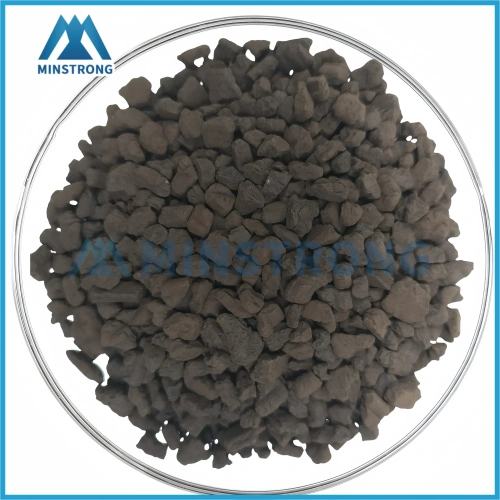
Minstrong vandenilio peroksido katalizatorius
1. Fentono tipo reakcija: Radikalios kartos, skatinamos elektronų perdavimo
Vienalytėje Fentono reakcijoje, Fe²⁺ atiduoda elektroną H₂O₂. Taip susidaro hidroksilo radikalai (· Oh): Fe²⁺ + H₂O₂ → Fe³⁺ + · Oh + OH⁻. Hidroksilo radikalo oksidacijos potencialas yra toks pat didelis 2.80 V. Todėl, jis gali neselektyviai mineralizuoti daugumą organinių teršalų. Tačiau, įprastinė sistema turi siaurą pH langą (2–4). Taip pat susidaro didelis geležies dumblo kiekis ir apsunkinamas katalizatoriaus regeneravimas.
Heterogeniniai vandenilio peroksido katalizatoriai pašalina šiuos trūkumus. Tiksliau, jie krauna aktyvius metalus (Fe, Cu, Mn) ant akytų atramų. Pavyzdžiui, paimkite Minstrongo Hopcalite katalizatorių (vario ir mangano mišrus oksidas). Jo paviršiuje yra Cu²⁺/Cu⁺ ir Mn⁴⁺/Mn³⁺ redokso poros. Šios poros nuolat katalizuoja H2O₂, kad susidarytų ·OH. Be to, katalizatorius yra regeneruojamas, o jo taikomas pH diapazonas siekia 4–9. Eksperimentai rodo, kad palaikomi vario-mangano katalizatoriai fenolio teršalus skaido 2–3 kartus greičiau nei homogeninė Fe²⁺ sistema..
2. Paviršiaus sąsajos aktyvinimas: Aktyvių svetainių ir masinio perdavimo sinergija
Du veiksniai stipriai veikia vandenilio peroksido katalizatorių skilimo efektyvumą. Vienas iš jų yra aktyvių vietų aktyvumas. Kitas yra reagentų masės perdavimo greitis. Taigi, būtina optimizuoti abu.
Vieno atomo katalizatoriai (pvz., Fe-N4 struktūra) pasiekti atominio lygio derinimą. Jie pirmiausia skatina heterolitinį H2O₂ skilimą. Taip susidaro didelės valentės geležies okso rūšys (Fe(IV)=O). Šiame kelyje, H₂O₂ panaudojimas gali siekti aukščiau 90%. Be to, išvengiama radikalaus gesinimo anijonais.
Deguonies laisvos vietos metalų oksiduose, tokiuose kaip mangano dioksidas, yra aktyvavimo centrai. Jie sumažina O – O ryšio disociacijos energiją. Pavyzdžiui, Minstrong aktyvuotas mangano dioksido katalizatorius reguliuoja laisvos deguonies koncentraciją, valdydamas kalcinavimo temperatūrą. Dėl to, šis reguliavimas sumažina katalizinio skilimo aktyvavimo energiją nuo maždaug 50 kJ/mol žemiau 35 kJ/mol.
Papildomai, katalizatoriaus gamyba į monolitinę struktūrą (pvz., ant korio keramikos) sumažina difuzijos atsparumą. Nepertraukiamo srauto reaktoriuje, monolitinis katalizatorius padidina COD pašalinimą 15–20 procentinių punktų, palyginti su miltelių pavidalo katalizatoriumi.
3. Multi-Metal sinergija: Redox Cycling pagreitis
Vieno metalo katalizatoriai dažnai susiduria su apribojimais dėl lėtos valentinės būsenos konversijos. Pavyzdžiui, Fe³⁺ redukcija į Fe²⁺ vyksta lėtai. Todėl, įvedus antrąjį metalą, susidaro bimetalinė sinergetinė sistema. Tai žymiai pagreitina elektronų perdavimą.
Paimkite Hopcalite katalizatorių (apytiksliai 40% CuO + 60% MnO₂) kaip pavyzdį. Cu⁺ katalizuoja H₂O₂, kad susidarytų ·OH, o paskui oksiduojasi į Cu²⁺. Tuo tarpu, kaimyninė Mn³⁺/Mn⁴⁺ pora greitai perkelia elektronus į Cu²⁺. Tai sumažina Cu²⁺ atgal į Cu⁺, katalizinio ciklo uždarymas.
Lyginamieji eksperimentai rodo tokius rodamino B skilimo per 120 minučių rezultatus: – Vienas CuO: apie 55% – Pavienis MnO₂: apie 42% – Vario-mangano kompozitinis katalizatorius: 89%
Trinare sistemoje, Pasiektas Fe-Mn-Cu@Al2O3 82.08% chinolino pašalinimas viduje 6 valandų. Kelios redokso poros (Fe³⁺/Fe²⁺, Mn⁴⁺/Mn²⁺, Cu²⁺/Cu⁺) sudaryti sudėtingą elektronų perdavimo tinklą. Vadinasi, šis tinklas slopina neefektyvų H2O₂ skaidymą.
4. Neradikalūs keliai: Perėjimas nuo plataus spektro prie selektyviosios oksidacijos
Vandenilio peroksido katalizatoriai neveikia vien tik ·OH būdu. Vietoj to, singletinis deguonis (¹O2) ir didelio valentingumo metalo okso rūšys (Fe(IV)=O, Mn(V)=O) pasiūlyti alternatyvų. Jie turi ilgesnį tarnavimo laiką ir didesnį selektyvumą. Pavyzdžiui, ¹O2 tarnavimo laikas yra mikrosekundės, o ·OH trunka tik nanosekundes.
Esant šarminėms sąlygoms, dviejų vietų vieno atomo katalizatorius (pvz., CuFe-PCN) skatina H2O₂ disproporciją, kad susidarytų 102. Singletinis deguonis pirmiausia atakuoja elektronų turtingas grupes. Jis taip pat atsparus anijonų trukdžiams. Tiksliau, eksperimentai rodo, kad esant pH=13, reakcijos greičio konstanta yra 75 kartų didesnis nei rūgščiomis sąlygomis. Be to, po katalizatoriaus aktyvumas neprarandamas 12 nuoseklus naudojimas.
Kitas tipiškas neradikalinis kelias yra iš geležies vieno atomo katalizatoriaus (Fe₁-GO). Tik su itin maža H₂O₂ doze 2 mM, šis katalizatorius generuoja Fe(IV)=O. Jis palaiko aukščiau 95% įvairių antibiotikų pašalinimas per keturis ciklus iš eilės. Be to, Fe(IV)=O yra nejautrus ·OH valymo priemonėms (pvz., chlorido jonai ir tret.-butanolis). Todėl, jis puikiai tinka didelio druskingumo nuotekoms.
Idealus katalizatorius turėtų dinamiškai reguliuoti du būdus. Viena vertus, mažo druskingumo nuotekose, jis gali naudoti ·OH greitam mineralizavimui. Kita vertus, esant dideliam druskingumui, šarminės nuotekos, jis gali pereiti prie neradikalaus degradacijos palaikymo kelio.
Išvada
Vandenilio peroksido katalizatorių skilimo stiprinimo mechanizmai pažangiuose oksidacijos procesuose išsiplėtė. Jie perėjo nuo vienos Fentono radikalios reakcijos į daugialypę sistemą. Ši sistema apima paviršiaus sąsajos aktyvavimą, kelių metalų sinergija, ir neradikalūs keliai. Minstrong yra įsipareigojusi paversti šiuos mechanizmus našumo patobulinimais. Tiksliau, bendrovė juos taiko savo Hopcalite katalizatoriams, vario oksido katalizatoriai, ir mangano dioksido katalizatoriai. Dėl to, šios technologijos suteikia geresnių sprendimų cheminiam nuotekų valymui, pramoninis išmetamųjų dujų valymas, ir naujų teršalų pašalinimas.
autorius:Gloria
data:2026-06-11
WeChat
Nuskaitykite QR kodą naudodami WeChat