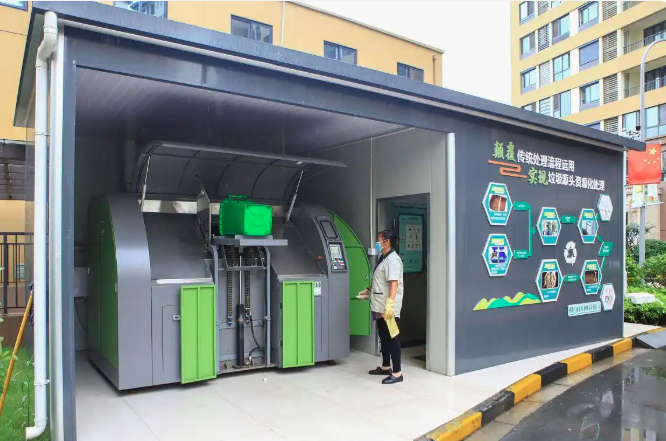
Odor issues at facilities such as waste transfer stations and landfills have become a major focal point for environmental inspections and resident complaints. Many facility operators have attempted to employ ozone-based deodorization technologies, only to encounter an awkward predicament: while ozone is indeed highly effective at breaking down malodorous molecules, any unreacted ozone that escapes into the atmosphere itself becomes a new pollutant. Is there a solution that harnesses ozone’s powerful oxidizing properties while simultaneously eliminating the inherent risks associated with it? The answer lies in a synergistic process combining “ozone oxidation” with “catalytic decomposition.”

I. Technical Principles: A Powerful Alliance, Each Performing Its Specific Role
Ozone’s potent oxidizing capabilities allow it to efficiently break down malodorous substances—such as hydrogen sulfide and ammonia—converting them into harmless carbon dioxide and water, while also providing sterilization and disinfection benefits. However, ozone itself is a pungent, hazardous gas; prolonged exposure can damage the respiratory tracts of facility operators, and emissions exceeding regulatory limits can result in environmental penalties.
The introduction of ozone decomposition catalysts offers a perfect resolution to this conflict. By installing a catalyst module downstream from the ozone treatment unit, active components—typically transition metal oxides—are utilized to rapidly decompose any residual ozone in the exhaust gas back into oxygen. Working in synergy, the upstream unit handles “deodorization,” while the downstream unit handles “tail gas abatement,” thereby achieving a true unification of efficient odor removal and safe emissions. Furthermore, specialized catalysts often feature a hydrophobic design; this ensures they maintain stable catalytic activity even within the harsh environments typical of waste transfer stations—characterized by high humidity (exceeding 90% RH) and high dust levels.
II. Environmental Pain Points: From “Compliance-Based Emissions” to “Complaint-Free Operations”
The environmental pressures facing waste transfer stations extend far beyond the simple requirement of “meeting emission standards.” It is a common occurrence for facilities to meet all regulatory emission standards yet still face complaints from local residents. Residents are acutely sensitive to the pungent, irritating odor of residual ozone, which frequently serves as the direct trigger for such complaints. By incorporating a catalyst, the ozone concentration in the exhaust stream can be reduced to below 0.1 ppm—effectively eliminating the ozone odor and, at the source, significantly reducing the rate of complaints from the surrounding community. A waste transfer station in a certain region utilized an integrated technology combining “precision atomization + biological decomposition + intelligent linkage,” resulting in an odor removal rate exceeding 92% and a 90% reduction in complaints from the surrounding community.

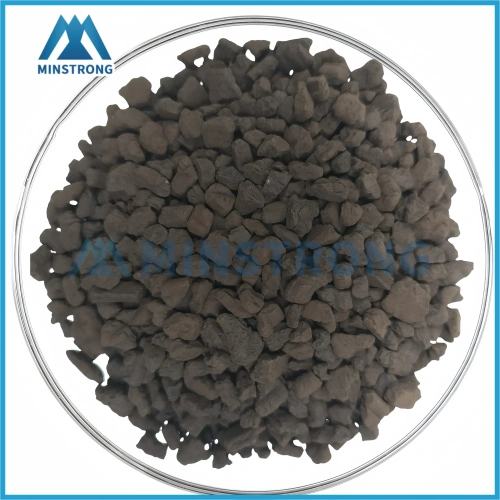
Minstrong ozone destruction Catalyst
III. Economic Analysis: Long-Term Operating Costs Outperform Traditional Solutions
In contrast to activated carbon adsorption—which requires frequent replacement as the carbon becomes saturated (incurring high disposal costs and generating hazardous waste)—the catalyst-based solution requires only a one-time installation. When paired with a compact ozone generator, the catalyst boasts a service life of 1–2 years, eliminating the need for frequent replacement. A comprehensive calculation of the unit cost for odor control reveals that the long-term economic efficiency of the ozone-plus-catalyst solution is significantly superior to that of consumable-based methods, such as activated carbon.
IV. Addressing Key Pain Points with Targeted Solutions
Pain Point 1: Odor removal via ozone treatment often results in high concentrations of residual ozone in the exhaust gas. Solution: Install an ozone decomposition catalyst module at the end of the exhaust duct to directly decompose residual ozone into oxygen. This solution has already been successfully implemented at various waste transfer stations, ensuring that treated exhaust emissions meet regulatory standards.
Pain Point 2: Waste transfer stations generate exhaust gas with high humidity levels, causing standard catalysts to easily absorb moisture and lose their activity. Solution: Select a high-humidity-resistant ozone decomposition catalyst. Through hydrophobic surface modification, this catalyst can operate stably over extended periods even in high-humidity environments.
Pain Point 3: Activated carbon requires frequent replacement and incurs high disposal costs. Solution: Adopt the catalyst-based solution, which offers long maintenance-free cycles and significantly reduces the frequency of operations and maintenance tasks, thereby lowering labor costs.
Odor control at waste transfer stations has now entered a new era characterized by “high efficiency, safety, and economic viability.” The synergistic process of “ozone oxidation + catalytic decomposition”—distinguished by its combined odor-removal power, zero ozone leakage, high humidity resistance, and long service life—is rapidly becoming the preferred technology for an increasing number of environmental sanitation projects. Contact us today to receive a customized odor control solution tailored to your specific needs, helping your waste transfer station eliminate complaints and effortlessly meet regulatory compliance standards.
Author: Kaka
Date: April 15, 2026
WeChat
Scan the QR Code with WeChat