 Minslite სერიის კატალიზატორები ოზონის/CO/VOC-ების მოსაშორებლად
Ozone is a strong oxidant. Industries commonly use it in water treatment, waste gas treatment, ნახევარგამტარების წარმოება, and medical disinfection. თუმცა, ozone itself is also an air pollutant. If residual ozone in industrial exhaust discharges without treatment, it violates environmental regulations. მეტიც, it harms equipment, human health, and the ecosystem. ამიტომ, ozone off‑gas destruction becomes an indispensable step in these processes.
Among the various ozone off‑gas treatment technologies, catalytic decomposition stands out. In fact, it is the most widely applied and lowest‑cost route in industrial ozone abatement. This method efficiently converts ozone into oxygen at room temperature. Specifically, room‑temperature catalytic decomposition technology uses Mn‑based catalysts. These catalysts lower the activation energy of the ozone decomposition reaction. As a result, the reaction proceeds efficiently at ambient temperature and pressure. უფრო მეტიც, the catalyst can be reused, which greatly reduces treatment costs. Its small footprint also makes it easy to integrate into various equipment.
This article systematically analyzes how room‑temperature catalytic decomposition technology reduces industrial operating costs. It covers four key aspects: energy consumption, equipment maintenance, catalyst lifetime, and ozone utilization efficiency.
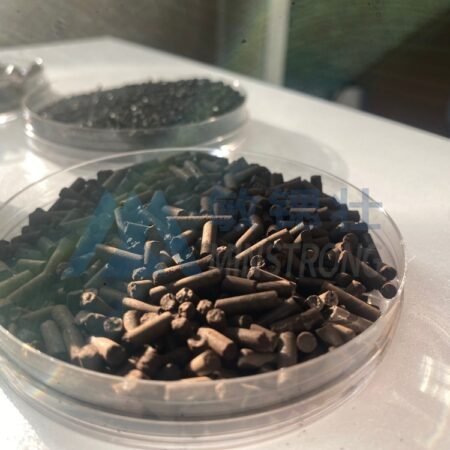
ოზონის დაშლის კატალიზატორი
1. Energy Cost: From “High Energy Consumption” რომ “Near‑Zero Energy Consumption”
The main industrial methods for ozone off‑gas treatment include activated carbon adsorption, thermal decomposition, and catalytic decomposition. პირველი, thermal decomposition was an early common approach. It heats the ozone‑containing gas to 300 °C to 400 °C. This provides sufficient energy for ozone molecules to decompose. When heated to 350 °C, the half‑life of ozone is less than 0.04 seconds. შესაბამისად, complete decomposition can be achieved within 1.5 რომ 2 seconds. Although this method has high decomposition efficiency, it consumes enormous energy. It also requires specialized heating equipment and thermal insulation. This results in high operating costs. For industrial production lines that operate 24/7, the electricity or fuel costs for heating alone represent a significant long‑term expense.
მეორე, activated carbon adsorption uses the porous structure of activated carbon to adsorb ozone molecules. ამ პროცესის დროს, ozone chemically reacts on the surface to decompose into oxygen. თუმცა, the adsorption capacity of activated carbon is limited. In fact, its efficiency drops sharply under high‑humidity and high‑ozone‑concentration conditions. Once saturated, it requires regeneration or replacement. This, in turn, increases both operating costs and maintenance complexity.
მესამე, room‑temperature catalytic decomposition is fundamentally different. მაგალითად, Mn‑based catalysts can decompose ozone into oxygen upon contact with ozone‑containing gas at room temperature or low temperature. მეტიც, they require no light source or any other external conditions. This technology operates at room or low temperature. As a result, it saves energy, and its operating cost is nearly zero. ამიტომ, by adopting room‑temperature catalytic decomposition, companies can completely eliminate the purchase, installation, ongoing energy, and maintenance costs of heating equipment. For a medium‑sized industrial plant, this alone can save hundreds of thousands to millions of yuan in energy expenses each year.
2. Equipment and Maintenance Costs: Simplified Systems and Reduced Labor
Beyond energy, equipment investment and routine maintenance are also major components of industrial ozone off‑gas treatment.
On one hand, thermal decomposition requires a series of equipment. This includes furnaces, სითბოს გადამცვლელები, temperature control systems, and insulation materials. შესაბამისად, this results in a complex system with a large footprint and high initial investment. მეტიც, long‑term high‑temperature operation leads to component aging and thermal fatigue. These issues require regular inspection and replacement. Maintenance costs therefore remain persistently high.
On the other hand, room‑temperature catalytic technology uses catalyst‑packed beds or modular components. This system is simple and requires fewer pieces of equipment. უფრო მეტიც, this process does not require any chemical additives or pH adjustment. It also does not need frequent manual operations, so labor costs are low. Operating at ambient temperature and pressure, it imposes no special high‑temperature resistance requirements on equipment materials. Instead, it eliminates the safety risks of high‑temperature equipment and reduces investment in safety protection. With integrated technology, the equipment involved is minimal. Operation is convenient, and the degree of automation is high.
3. Catalyst Lifetime and Replacement Costs
As a consumable, the service life of the catalyst directly affects long‑term operating costs.
In room‑temperature catalytic decomposition, the catalyst replacement cycle is a key economic factor. Industrial application data show that under ambient temperature and pressure, the catalyst in ozone catalytic oxidation equipment has a replacement cycle of 2 რომ 3 წლები. There are no maintenance costs in between. This means that companies only need to replace the catalyst every 2 რომ 3 წლები. As a result, they have virtually no additional maintenance outlay during that period.
მეტიც, some catalysts are capable of regeneration. Catalytic materials can continuously desorb and regenerate during operation. This enables recycling. If activity declines after a certain period, it can be restored by appropriate methods. The application of regeneration technology further extends the effective service life of the catalyst. შესაბამისად, this reduces the catalyst cost per unit time.
In actual selection, the annualized cost of catalysts varies significantly. მაგალითად, compare two catalysts: Catalyst A costs 2,000 yuan/L and lasts 2 წლები. ამიტომ, its annualized cost is 1,000 yuan/L·yr. Catalyst B costs 1,000 yuan/L but lasts only 6 months. Thus, its annualized cost is 2,000 yuan/L·yr. Clearly, the cheaper Catalyst B actually has twice the annualized cost of Catalyst A. This demonstrates that focusing solely on initial purchase price while ignoring service life often leads to much higher long‑term expenditures. გარდა ამისა, using a catalyst beyond its useful life can increase the overall system operating cost by more than 30%.
ამის საპირისპიროდ, thermal decomposition has no catalyst replacement cost. თუმცა, the accumulated high energy expenditure over 2 რომ 3 years far exceeds the one‑time purchase cost of the catalyst. From a life‑cycle cost perspective, room‑temperature catalytic technology has a clear economic advantage.
4. Indirect Cost Savings Through Improved Ozone Utilization
At the source of ozone application, increased ozone utilization also significantly reduces operating costs.
In conventional ozone oxidation processes, a large amount of ozone discharges with the off‑gas without participating in the reaction. This wastes the electricity consumed by the ozone generator. It also increases the burden on tail‑gas treatment. თუმცა, with efficient catalysts, ozone utilization can dramatically rise from about 30% to over 95%. Higher utilization means that the same ozone production can achieve better treatment results. Alternatively, ozone generation can reduce while maintaining the same treatment performance. This, in turn, lowers the power consumption and size of the ozone generator.
Data show that with ozone catalytic oxidation technology, the ozone dosage per mg/L of COD removed can be below 1.5 mg/L. უფრო მეტიც, the short residence time in the catalyst bed significantly reduces the amount of catalyst required and the overall footprint. This efficiency gain translates into notable cost savings over the long term. მაგალითად, one engineering practice reported that operating costs decreased by about 15.2% after adopting catalytic ozone oxidation.
5. Comprehensive Cost Comparison and Practical Benefits
Comparing all the above cost factors clearly demonstrates the economic advantages of room‑temperature catalytic decomposition:
| Cost Item | თერმული დაშლა | Room‑Temp Catalytic Decomposition |
|---|---|---|
| Energy Consumption | მაღალი (continuous heating at 300–400 °C) | Very low (operating cost nearly zero) |
| Equipment Investment | მაღალი (furnaces, სითბოს გადამცვლელები, insulation systems, და ა.შ.) | Low (catalyst bed or modular components) |
| Maintenance Cost | მაღალი (regular overhaul of high‑temp equipment) | Low (maintenance‑free for 2–3 years) |
| Labor Cost | Moderate | Low (infrequent operations) |
| Safety Investment | მაღალი (high‑temperature protection) | Low (ambient‑temperature operation) |
Taking the semiconductor industry as an example, the annual market demand for ozone off‑gas treatment in this sector alone is around 2 billion yuan. As environmental regulations on ozone emission limits continue to tighten, this market continues to grow. შესაბამისად, room‑temperature catalytic decomposition technology, with its comprehensive advantages of “near‑zero energy consumption, maintenance‑free operation, and long service life,” is becoming the preferred solution for an increasing number of industrial enterprises.
დასკვნა
მოკლედ, room‑temperature catalytic ozone decomposition technology systematically reduces industrial operating costs in ozone off‑gas treatment through multiple pathways: eliminating high‑temperature heating, simplifying equipment systems, extending catalyst replacement cycles, and improving ozone utilization. For industrial enterprises pursuing both environmental compliance and cost reduction, this is undoubtedly a technology path that delivers both environmental and economic benefits. As catalyst preparation techniques continue to mature and production scales expand, the application cost of room‑temperature catalytic decomposition will further decline. Ultimately, it will provide economically feasible ozone abatement solutions for an even broader range of industrial scenarios.
ავტორი: გლორია
თარიღი:2026/6/17
WeChat
დაასკანირეთ QR კოდი WeChat-ით