電話:+86-18142685208 電子メール: minslite@minstrong.com

について 接触 見積もりを取得する

業界の知識 & トレンド一酸化炭素酸化

Why Are Pre-Treatment Systems Critical for Carbon Monoxide Catalysts?

Without pre-treatment units such as dust removal, desulfurization, dechlorination, and organosilicon removal, a carbon monoxide catalyst will be permanently deactivated within weeks to months due to chemical poisoning, physical plugging, acid corrosion, and silica glassification. Under such conditions, the catalyst service life will sharply decline from the normal 2–5 years to just 3–6 months, or even less. Pre-treatment is not an optional add‑on but the most critical prerequisite for reliable and economical CO catalyst performance.

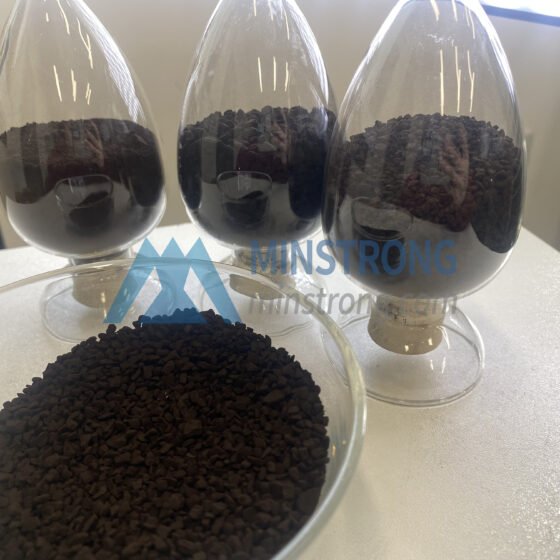
Carbon Monoxide Catalysts

Carbon Monoxide Catalysts

1. Chemical Poisoning – Irreversible Loss of Active Sites

Sulfur compounds (H₂S, SO₂), chlorides (HCl, Cl₂), phosphorus compounds, and heavy metals (arsenic, lead, zinc, 等) are the primary poisons for CO oxidation catalysts. In the absence of desulfurization or dechlorination pre‑treatment, these substances react with the catalytically active metal components (platinum, palladium, copper, manganese, 等) to form stable, non‑catalytic sulfides or chlorides. This reaction alters the electronic structure and physical morphology of the active phase and cannot be reversed by any regeneration method.

Even at concentrations as low as 10–50 ppm, sulfur or chlorine can reduce CO conversion from above 99% to less than 20% within just a few weeks. Heavy metals and phosphorus compounds gradually accumulate on the active sites, causing progressive, irreversible poisoning. Without upstream pre‑treatment, these poisons will travel unimpeded into the catalyst bed – a classic case of irreversible chemical deactivation.

2. Physical Plugging – Suffocation of the Catalyst Bed

While chemical poisoning destroys the catalyst from the inside, physical plugging “suffocates” it from the outside. When dust removal pre‑treatment (e.g., baghouse filters, cyclones) is inadequate, sub‑micron to millimeter‑sized dust particles enter directly into the catalyst’s honeycomb channels or porous washcoat. These particles gradually accumulate and compact, forming a hard outer shell that causes a sharp rise in bed pressure drop – sometimes doubling or even increasing five‑fold after only a few hundred hours of operation.

The consequences include significantly higher fan energy consumption, severe maldistribution of gas flow, and ultimately a portion of the exhaust bypassing the catalyst bed. The situation becomes even worse when the exhaust contains tar or high‑boiling‑point organics. Without condensation or tar‑removal pre‑treatment, these sticky substances condense on cooler catalyst surfaces, forming a glue‑like liquid film that firmly traps dust and creates a “sludge” layer. Such deposits are nearly impossible to remove by back‑purging, rendering the catalyst permanently useless.

3. Synergistic Acid Corrosion – Structural Collapse of the Catalyst Support

When acid gases (SO₃, HCl) are present together with water vapor, and no acid gas pre‑treatment or drying unit is installed, the catalyst faces a third failure mechanism: acid corrosion. Condensed water reacts with SO₃ and HCl to form sulfuric acid and hydrochloric acid. These strong acids not only attack the active metal components but – more severely – erode the catalyst support (typically γ‑Al₂O₃ or honeycomb ceramic).

Acid corrosion causes the support structure to collapse and the specific surface area to drop dramatically, leading to shedding, agglomeration, or loss of active components by entrainment. This deactivation is structural: even if fresh active material could be added, the fragmented support cannot hold it in place. When chemical poisoning, physical plugging, and acid corrosion occur simultaneously – which is common in the absence of pre‑treatment – catalyst degradation becomes a “snowballing,” self‑accelerating process.

4. Silicone Glassification – The Ultimate Irreversible Destruction

Among all hazards, “glassification” caused by organosilicon compounds (common in paint shops, electronics plants, landfill gas, 等) is the most fatal and irremediable. When silicone oil vapors or siloxanes enter the higher‑temperature zone of the catalyst (typically >250–300°C), they combust to form silicon dioxide (SiO₂) – a dense, smooth, chemically inert glassy substance. Without a dedicated upstream adsorption protection bed (e.g., activated carbon or silica gel), this SiO₂ is not blown away like ordinary dust; instead, it deposits as a glassy film on the catalyst surface and blocks the micropores.

This glass film is highly resistant to heat, acids, alkalis, and mechanical impact. None of the currently known regeneration methods (high‑temperature baking, chemical cleaning, ultrasonic treatment) can remove it. Once glassification occurs, the catalyst is permanently sealed in a “transparent coffin.” If the exhaust contains organosilicon compounds, deactivation can happen in just tens of hours. For gas streams containing siloxanes, pre‑treatment is not a recommendation – it is a survival imperative.

5. Operational & Economic Consequences – The High Price of Skipping Pre‑Treatment

Lack of pre‑treatment not only destroys the CO catalyst but also triggers a cascade of operational problems:

  • Frequent shutdowns – Required for pressure‑drop cleaning or catalyst replacement, leading to production losses and increased labor costs.
  • Environmental compliance risks – Excessive CO emissions may result in fines or even production stoppages.
  • Secondary damage – Fragmented catalyst debris can travel downstream into other equipment (heat exchangers, fans, stacks), causing additional harm.
  • Misdiagnosis cycle – Users often blame rapid failure on “poor catalyst quality” when the root cause is missing pre‑treatment. This misconception leads to repeatedly purchasing new catalysts without ever solving the underlying problem, trapping them in a vicious cycle of “replace → fail → replace again.”

From an economic perspective, the initial investment for a complete pre‑treatment train (baghouse filter, desulfurization tower, activated carbon protection bed, 等) is typically equivalent to the cost of only 2–3 catalyst replacements. Skipping pre‑treatment saves a small upfront expense but multiplies operating costs through frequent catalyst changes and environmental penalties.

Conclusion

The relationship between pre‑treatment equipment and a CO catalyst is one of “the lips and the teeth” – each depends on the other. Dust removal, desulfurization, dechlorination, tar removal, organosilicon removal – every single step is not an extra burden but a necessary investment to ensure the catalyst achieves its design service life. Bypassing pre‑treatment means actively abandoning system reliability, economy, and compliance.

For any industrial CO catalytic oxidation application, a well‑designed pre‑treatment system is the cornerstone of long catalyst life. Without it, failure is not a question of “if” – but of “when.” And “when” usually comes very quickly.


authorGloria
date:2026-05-21

前へ:

伝言を残す