 Catalizzatori serie Minslite per la rimozione di ozono/CO/COV
Monossido di carbonio (CO) è un gas tossico. Le industrie spesso lo producono nei processi di combustione. L’ossidazione catalitica è il modo più efficiente per rimuovere la CO. Gli ossidi compositi rame-manganese sono tra i migliori catalizzatori per questo compito. Le loro prestazioni dipendono da un delicato equilibrio tra abbondanza di siti attivi e stabilità strutturale.
Questo articolo spiega questo equilibrio. Copre quattro argomenti: la natura dei siti attivi, i pro e i contro di un’elevata superficie, le cause del decadimento del catalizzatore, e strategie per ottimizzare sia l’attività che la durata della vita.
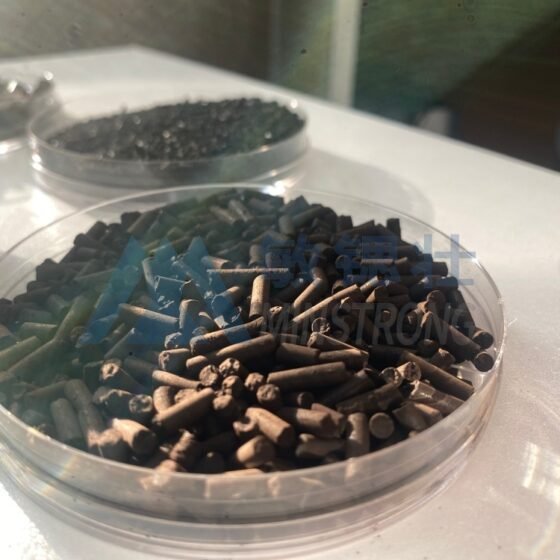
Catalizzatori di monossido di carbonio
Siti attivi: Posti vacanti di ossigeno e sinergia rame-manganese
L'attività catalitica non si distribuisce uniformemente su tutta la superficie. Si concentra su difetti specifici chiamati posti vacanti di ossigeno. Questi sono punti in cui mancano gli atomi di ossigeno dal reticolo cristallino. I posti vacanti di ossigeno possono assorbire molecole di CO. Fungono anche da siti in cui l'O₂ si divide in atomi di ossigeno reattivi.
Negli ossidi di rame‑manganese, rame e manganese lavorano insieme. Il rame assorbe CO2 attraverso cambiamenti nel suo stato di valenza (Cu⁺/Cu²⁺). Il manganese fornisce ossigeno attivo attraverso il proprio ciclo redox (Mn³⁺/Mn⁴⁺). Questa sinergia aumenta il potere dei posti vacanti di ossigeno. Riduce l'energia di attivazione per l'ossidazione della CO da circa 80‑100 kJ/mol fino a 30‑50 kJ/mol. Di conseguenza, la reazione procede rapidamente a temperatura ambiente (0-40°C).
Il numero di siti attivi influisce direttamente sull'attività iniziale. Più posti vacanti di ossigeno per grammo di solito significano una maggiore conversione di CO. Tuttavia, questi siti fanno parte della struttura cristallina del catalizzatore. Il quadro deve restare stabile nel tempo. Se il quadro si indebolisce, i siti perdono la loro attività. Questa è la radice del compromesso tra superficie e durata della vita.
Superficie elevata: Una spada a doppio taglio

Un’elevata area superficiale specifica è fondamentale per l’ossidazione della CO a temperatura ambiente. Quando l'area raggiunge 180‑240 m²/g, il catalizzatore forma una fitta rete di micropori (sotto 2 nm) e mesopori (2-50nm). Questa rete espone molti siti attivi per unità di massa. Sotto asciutto, condizioni pulite (umidità relativa inferiore al 10%), tali catalizzatori possono convertire oltre il 95% della CO in un unico passaggio. Funzionano bene a velocità spaziali di 3.000‑80.000/h.
Ma l’elevata superficie comporta anche dei punti deboli. Primo, molti micropori riducono la resistenza meccanica. La resistenza media allo schiacciamento può scendere al di sotto di 45 N/cm. Ciò rende le particelle inclini a rompersi sotto il flusso d'aria. Secondo, un'area superficiale elevata significa che più atomi superficiali sono insaturi. Questi atomi migrano e si aggregano ad alte temperature o in condizioni di calore umido. Questa sinterizzazione disattiva i siti. Terzo, troppi micropori rallentano la diffusione del gas. Ad alte velocità spaziali, la resistenza alla diffusione interna aumenta, abbassando l’efficienza apparente.
Perciò, una superficie maggiore non è sempre migliore. Deve corrispondere alle condizioni operative reali: velocità spaziale, temperatura, e livelli di impurità.
Perché i catalizzatori si degradano: Avvelenamento, Sinterizzazione, e Rottura
Il decadimento del catalizzatore nelle applicazioni reali deriva da tre cause principali. Accadono spesso insieme.
Avvelenamento di siti attivi
Il vapore acqueo è il veleno più comune. Le molecole d'acqua si legano fortemente ai posti vacanti di ossigeno attraverso i legami idrogeno. Bloccano l’assorbimento di CO, causando una disattivazione reversibile. Quando l'umidità in ingresso supera il 10‑15%, la conversione diminuisce drasticamente. Umidità superiore al 45% per lunghi periodi, può verificarsi una disattivazione irreversibile per condensazione capillare. Composti dello zolfo (come H₂S e SO₂) e le olefine reagiscono irreversibilmente con i componenti attivi. Questi distruggono permanentemente i siti attivi.
Sinterizzazione termica
Quando si trattano elevate concentrazioni di CO (oltre il 5% in volume), la reazione esotermica può riscaldare improvvisamente il letto. Questa si chiama fuga. Ad alte temperature, i grani di ossido di rame-manganese diventano più grandi. La superficie specifica diminuisce rapidamente, e i posti vacanti di ossigeno si fondono e svaniscono. Dopo il raffreddamento, il catalizzatore sinterizzato non può riprendere la sua attività.
Rottura meccanica
I catalizzatori deboli si decompongono gradualmente sotto il flusso d’aria a lungo termine e i cambiamenti di temperatura. Producono polvere fine. Questa polvere intasa il letto, aumenta la caduta di pressione, e riduce la massa effettiva dei siti attivi. Questi tre meccanismi spesso lavorano insieme. Per esempio, il gas umido non solo avvelena i siti, ma accelera anche la sinterizzazione idrotermale.
Come raggiungere l'equilibrio: Tre strategie fondamentali
Per bilanciare la superficie e la durata della vita, possiamo utilizzare tre approcci principali.
Ottimizza la distribuzione delle dimensioni dei pori
Non puntare solo alla massima superficie. Invece, progettare una struttura dei pori che favorisca i mesopori (2-50nm). Gli studi dimostrano che i catalizzatori con molti mesopori mantengono un'elevata area superficiale offrendo allo stesso tempo una migliore diffusione del gas e proprietà meccaniche più forti rispetto ai materiali microporosi. Un catalizzatore ideale ha un sistema di pori gerarchico: i micropori danno posti vacanti di ossigeno, i mesopori consentono il trasporto del gas, e macropori (oltre 50nm) ridurre la caduta di pressione del letto. Controllando la quantità di agente che forma pori durante la preparazione, possiamo regolare il rapporto dei mesopori per superare il 50% del volume totale dei pori.
Controlla il rapporto molare rame‑manganese
Mantenere il Cu:Mn rapporto molare tra 2.2:1 E 3.5:1. All'interno di questo intervallo, il catalizzatore forma una fase spinello stabile (CuMn₂O₄) o soluzione solida. Questa struttura resiste alla sinterizzazione meglio dei semplici ossidi misti. Un eccesso di un metallo (solitamente manganese) agisce come promotore strutturale, inibendo la crescita del grano alle alte temperature. Questo rapporto garantisce sufficienti posti vacanti di ossigeno mantenendo stabile il reticolo.
Migliora il processo di stampaggio e aggiungi il pretrattamento
Durante l'estrusione o la compressatura, aggiungere una piccola quantità di legante inorganico, come sol di silice o sol di allumina. Ciò può aumentare la resistenza alla frantumazione oltre 60 N/cm senza ridurre notevolmente la superficie. Controllare la dimensione delle particelle a circa 3‑5 mm di diametro e 3‑8 mm di lunghezza. Ciò ottimizza sia la caduta di pressione del letto che la resistenza alla rottura.
A livello ingegneristico, installare uno strato di essiccazione prima del letto catalitico. Mantenere il punto di rugiada in ingresso al di sotto di ‑20°C. Aggiungi anche un filtro antipolvere. Questi passaggi riducono il vapore acqueo e le particelle che attaccano i siti attivi. Prolungano significativamente la durata effettiva del catalizzatore.
Riepilogo
In sintesi, i posti vacanti di ossigeno sono essenziali per l’ossidazione della CO a temperatura ambiente. La superficie è il fattore principale che determina il numero di questi posti vacanti. Ma un’elevata area superficiale indebolisce inevitabilmente la resistenza meccanica e favorisce la sinterizzazione. C'è un compromesso.
Per gestire questo compromesso, possiamo ottimizzare la distribuzione delle dimensioni dei pori (favoriscono i mesopori), controllare il rapporto Cu/Mn (2.2:1‑3.5:1), e migliorare il processo di stampaggio con leganti. Combinando questi con il pretrattamento tecnico (essiccazione e filtrazione) preserva i siti attivi migliorando la stabilità strutturale.
Quando si sceglie un catalizzatore, i tecnici dovrebbero esaminare le condizioni operative specifiche: umidità, temperatura, concentrazione di CO, e la portata del gas. Non perseguire ciecamente la superficie più alta. Invece, seleziona un catalizzatore con il giusto equilibrio tra superficie e resistenza per le tue esigenze. Solo comprendendo questo equilibrio è possibile ottenere elevata efficienza e lunga durata nelle applicazioni pratiche.
autore: Gloria
data:2026/4/23
WeChat
Scansiona il codice QR con WeChat