 Catalyseurs de la série Minslite pour l'élimination de l'ozone/CO/COV
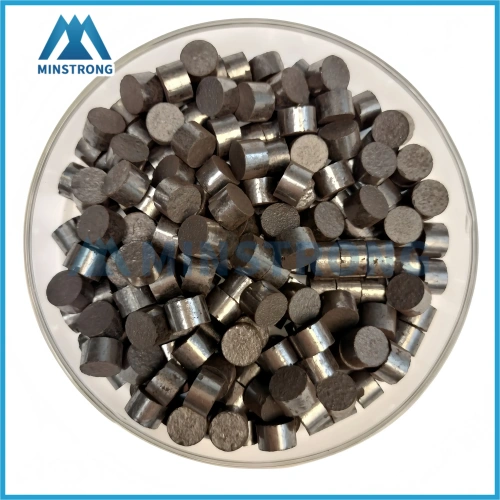
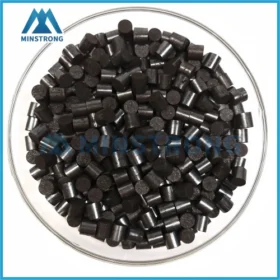
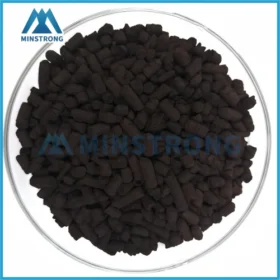

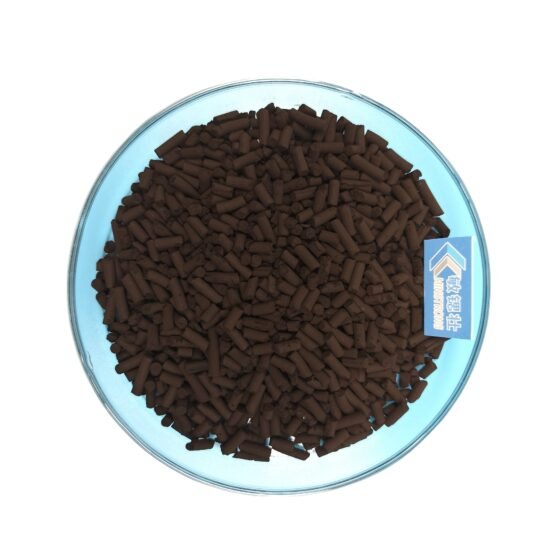
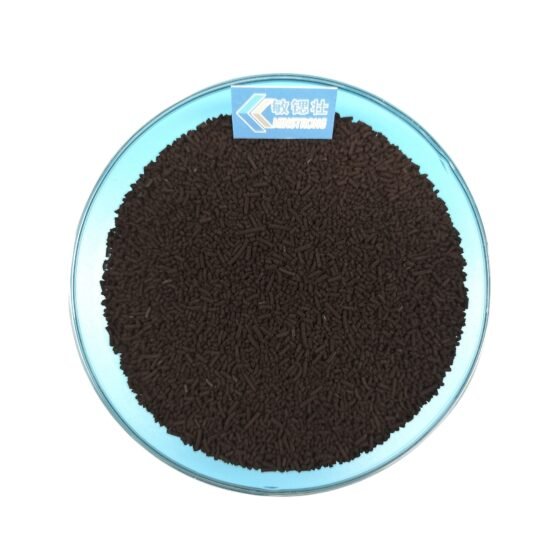
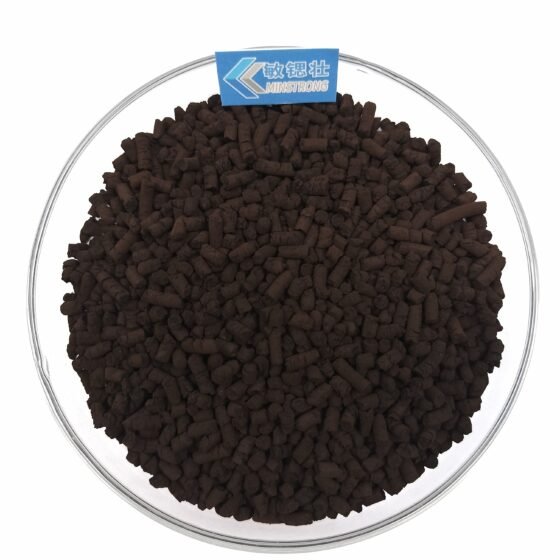
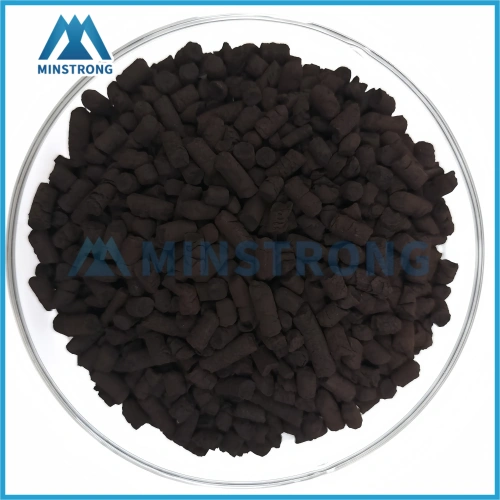
Présentation du produit
- La technologie des catalyseurs à l'ozone est un processus d'oxydation avancé basé sur l'ozone.. Il combine les fortes propriétés oxydantes de l'ozone avec les propriétés d'adsorption et catalytiques du catalyseur., et être prouvé plus efficacement en résolvant le problème de la faible efficacité du traitement à l'ozone, faible utilisation de l'ozone, coûts d'exploitation élevés, et la dégradation incomplète des matières organiques.
- L'état de phase du catalyseur d'oxydation catalytique à l'ozone est divisé en ozonation catalytique homogène et ozonation catalytique hétérogène.. Dans la technologie d'ozonation catalytique homogène, le catalyseur est uniformément réparti et possède une activité catalytique élevée, le mécanisme d'action est clair, et il est facile d'étudier et de comprendre. Cependant, ses défauts sont également évidents. Le catalyseur est miscible à l'eau, ce qui le fait facilement perdre, difficile à recycler, et provoquer une pollution secondaire. Le coût d'exploitation est élevé et le coût de traitement de l'eau est augmenté. La méthode d'ozonation catalytique hétérogène utilise un catalyseur solide pour accélérer la réaction d'oxydation en phase liquide (ou phase gazeuse) sous pression normale. Le catalyseur existe à l'état solide, est insoluble dans l'eau, ne s'enfuit pas, n'a pas de pollution secondaire, et réduit le coût d'exploitation de l'oxydation catalytique.
- La méthode d'oxydation catalytique à l'ozone des eaux usées est une technologie d'oxydation avancée à grande échelle, qui est principalement réalisé par deux voies d'oxydation directe et d'oxydation catalytique. L'ozone peut directement minéraliser les grosses molécules, longues chaînes, et les matières organiques difficiles à biodégradables restant dans les eaux usées en dioxyde de carbone et en eau, et se décompose partiellement en petites molécules et substances facilement biodégradables, détruire la structure de la matière organique non biodégradable, réduire la toxicité, et augmenter le ratio B/C, afin d'assurer l'effet de traitement des méthodes biochimiques ultérieures. La technologie traditionnelle d'oxydation à l'ozone est principalement l'oxydation directe, qui a un mauvais effet de transfert de masse, faible taux d'utilisation de l'ozone, et des coûts d'investissement et d'exploitation élevés.
Caractéristiques du produit
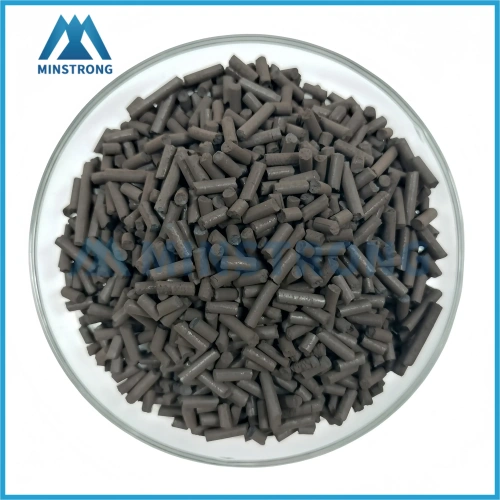
- Le catalyseur Minstrong a une bonne résistance, et la résistance moyenne à l'écrasement est de 60 à 200 N/cm;
- La surface spécifique est élevée, d'une surface spécifique supérieure à 200 m2/g, et un grand nombre de structures microporeuses sont réparties à l'intérieur du catalyseur, qui peut absorber efficacement l'ozone et effectuer une décomposition catalytique;
- Le catalyseur Minstrong résiste aux températures élevées et ne contient pas de composants inflammables et volatils. Lorsqu’il s’agit d’ozone à haute concentration, il n'y a aucun risque de combustion et aucune pollution secondaire;
- La teneur en principes actifs est élevée, la teneur en principes actifs du catalyseur peut atteindre plus de 85%, les performances sont stables, la vie est longue, et ce n'est pas facile de perdre;
- Les matières premières et le processus de production du catalyseur sont complètement indépendants et contrôlables, et peut être fourni de manière stable.
Applications
- Paramètres de performance du catalyseur d'ozone pour le traitement des eaux usées et des eaux usées
WeChat
Scannez le code QR avec WeChat