 Minslite-sarjan katalyytit otsonin/CO:n/VOC:n poistoon
minä. Johdanto
Hiilimonoksidikatalyytit ovat elintärkeitä puolijohdealalla. Kupari-mangaanioksidijärjestelmät (esim., Hopcalite) näytellä avainroolia. Niitä käytetään erittäin puhtaan kaasun tuotannossa, puhdastilojen ilmanpuhdistus, ja prosessin pakokaasujen käsittely. Kuitenkin, nämä katalyytit menettävät vähitellen aktiivisuutensa käytön aikana. Monet tekijät aiheuttavat tämän deaktivoinnin. Tekniset tiedot osoittavat, että noin 65% ennenaikaiset katalyytin vaihdot johtuvat suoraan deaktivoitumisesta. Siksi, deaktivointimekanismien ymmärtäminen on ratkaisevan tärkeää. Samoin kohdistetut vastatoimet. Ne takaavat pitkän aikavälin, puhdistusjärjestelmien vakaa toiminta.
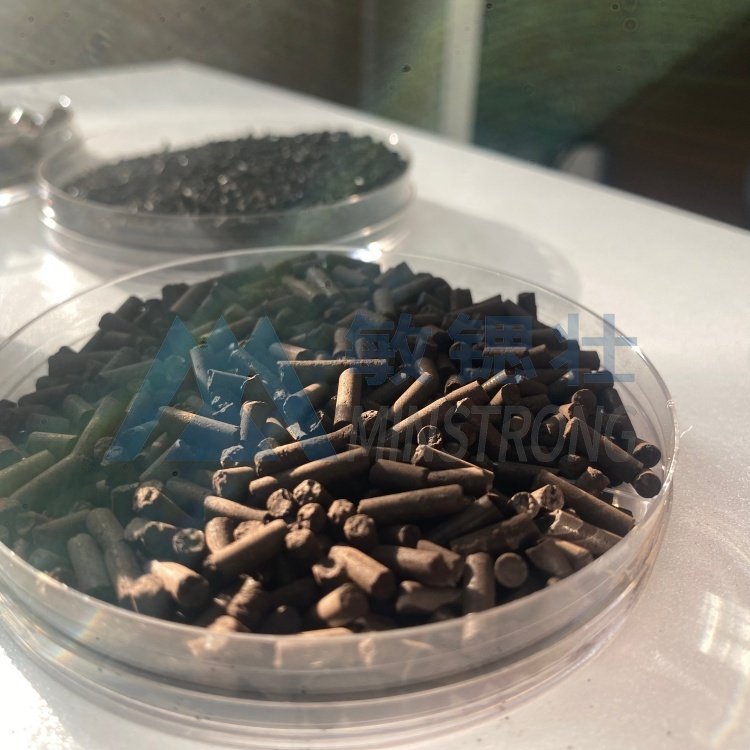
Hiilimonoksidikatalyytit
II. Tärkeimmät deaktivoinnin tyypit ja mekanismit
2.1 Kosteusmyrkytys: Yleisin, Silti osittain käännettävä
Vesimolekyylit kilpailevat CO:n kanssa adsorptiokohdista katalyytin pinnalla. Tämä estää reagoivia aineita pääsemästä aktiivisiin kupari-mangaanikeskuksiin. Ympäristöissä, joissa suhteellinen kosteus on yli 60%, tavalliset katalyytit häviävät 50% toiminnastaan vain 24 tuntia. Jos kosteus nousee 80% ja jatkuu 72 tuntia, CO-konversioprosentti voi laskea 98% alle 40%. Aktiivisuus voi palautua osittain, kun kuivat olosuhteet palaavat. Kuitenkin, toistuvat kosteusshokit voivat aiheuttaa peruuttamattomia vaurioita katalyytin kidehilassa.
Tapaustutkimus: Puolijohteisessa ilmanerotusjärjestelmässä, katalyytin konversioprosentti laski jyrkästi kosteana kesänä. Sisääntulon CO-pitoisuus oli 2.5 ppm. Ulostulon keskittyminen nousi 1.8 ppm. Vaadittu suunnitteluspesifikaatio ≤ 0.5 ppm. Tarkastuksessa havaittiin, että kuivaimen ulostulon kastepiste oli noussut -45°C:sta -28°C:een. Tämä johti suhteelliseen kosteuteen 65% katalyyttipedin sisääntulossa. Kuivausaineen vaihdon jälkeen, katalyytin aktiivisuus palautui vähitellen 48 tuntia.
2.2 Kemiallinen myrkytys: Peruuttamaton toiminnan menetys
Rikkimyrkytys: H2S tai SO2 reagoi katalyytin CuO-komponentin kanssa. Se muodostaa CuS:n, joka on erittäin vakaa. Kun H2S-pitoisuus saavuttaa 0.5 ppm ja jatkuu 24 tuntia, CO-konversio laskee noin 40%. Jälkeen 72 tuntia, muunnos jää alle 20%. Normaalit regenerointimenetelmät eivät voi ottaa katalyyttiä talteen.
Kloorimyrkytys: Cl2 tai HCl reagoi muodostaen CuCl2:ta tai MnCl2:ta. Tämäntyyppinen myrkytys on jopa voimakkaampaa kuin rikkimyrkytys. Altistuminen vain 0.2 ppm Cl2 varten 48 tuntia voi aiheuttaa katalyytin hukkaa 80% sen toiminnasta.
Tapaustutkimus: Tietyssä CVD-pakokaasujen käsittelyjärjestelmässä, katalyytin konversioprosentti laski 95% to 58% kuuden kuukauden käytön jälkeen. Pinta-analyysi osoitti klooripitoisuuden 3.2%. Tuoreessa katalyytissä oli vähemmän kuin 0.05% kloori. Alkalipesutornin asennuksen jälkeen, sama katalyyttierä saavutti käyttöiän 14 kuukautta.
2.3 Terminen sintraus: Rakenteellinen vika korkeissa lämpötiloissa
CO:n hapettuminen on voimakkaasti eksotermistä (ΔH = -283 kJ/mol). Kun sisääntulon CO-pitoisuus nousee äkillisesti tai lämmön poistuminen on riittämätöntä, Paikalliset lämpötilat katalyyttipedissä voivat ylittää 100 °C. Tämä ylittää paljon optimaalisen käyttölämpötila-alueen (0-50°C). Tuoreella katalyytillä on ominaispinta-ala 220 m²/g. Jatkuvan 80°C:n käytön jälkeen 500 tuntia, sen ominaispinta-ala laskee 95 m²/g. Tämä vähentää aktiivisuutta noin 60%. Jokaista 20°C lämpötilan nousua kohti, sintrausnopeus nousee noin yhden suuruusluokan.
Tapaustutkimus: Korkean puhtauden kaasun tuotantolaitoksessa, ylävirran adsorption läpimurto aiheutti sisäänmenon CO-pitoisuuden nousemisen 2 ppm kohteeseen 15 ppm. Voimakas reaktio sai katalyyttikerroksen keskikohdan saavuttamaan 95 °C:n. Säteittäinen lämpötilaero oli 25°C. Sen jälkeen, tämä katalyyttierä ei koskaan palautunut yllä olevaan konversioprosenttiin 90%.
III. Systemaattiset ehkäisystrategiat
3.1 Kosteusmyrkytysten ehkäisy
Ylävirtakuivaus: Ilman erotukseen ja erittäin puhtaan kaasun tuotantoon, kuivaimen ulostulon kastepisteen tulee olla ≤ -40°C. Pakokaasujen käsittelyyn, suhteellisen kosteuden tulee olla ≤ 40%. Asenna online-kastepistemittari ja hälytysjärjestelmä.
Valikoima kosteutta kestäviä katalyyttejä: Joissakin skenaarioissa ei voida täysin välttää kosteutta. Esimerkkejä ovat puhdastilojen raitisilman imuosat. Näissä tapauksissa, Valitse harvinaisten maametallien dopingilla modifioidut katalyytit (Ce, The) tai hydrofobisia kantajia. Tällaiset katalyytit säilyvät 80% alkuvaiheessa yli kuuden kuukauden ajan ≤ 90% suhteellinen kosteus.
Säännöllinen regeneraatio: Kosteusmyrkytyksiä saaneet katalyytit voidaan regeneroida. Huuhtele niitä kuumalla typellä 80–100 °C:ssa 12–24 tunnin ajan. Tämä palauttaa 70–90 % alkuperäisestä aktiivisuudesta.
3.2 Kemiallisen myrkytyksen ehkäisy
Ylävirran poisto: Rikille- tai klooria sisältävää jätekaasua, asentaa alkupään alkalipesutornit. Käytä 5–10 % NaOH-liuosta. Tämä poistaa yli 95% HCl:sta ja Cl2:sta. Asenna myös aktiivihiili- tai molekyyliseulaadsorptiopedit. Käytä sisäänrakennettua pH-mittaria alkalisen liuoksen pitoisuuden seuraamiseen.
Varhaisen varoituksen seuranta: Asenna sisäänrakennetut H₂S- ja Cl₂-ilmaisimet katalyytin sisääntuloon. Aseta hälytyskynnykset arvoon H₂S > 0.1 ppm ja Cl2 > 0.05 ppm. Jos nämä rajat ylittyvät, aktivoi varaesikäsittelyjärjestelmät tai sammuta ne tutkiaksesi.
Myrkytyksenkestävät katalyytit: Valitse katalyytit, joissa on uhrattavia komponentteja (esim., ZnO). Nämä komponentit reagoivat ensisijaisesti rikin tai kloorin kanssa. Tämä suojaa ensisijaisia aktiivisia komponentteja.
3.3 Terminen sintraamisen estäminen
Activity Matching: Käyttöolosuhteisiin, joissa tuloaukon CO-pitoisuuden vaihtelut ovat suuret, Valitse katalyytit, joilla on kohtalainen aktiivisuus ja erinomainen lämpöstabiilisuus. Ohjaavana periaatteena on varmistaa, että ulostulon päästöstandardit täyttyvät. Älä tavoittele sokeasti korkeinta mahdollista muuntokurssia.
Lämpötilan valvonta: Aseta vähintään kolme lämpötilan valvontapistettä katalyyttipedin säteittäisen poikkileikkauksen poikki. Jos säteittäinen lämpötilaero ylittää 10°C, tarkasta kaasuvirtauksen jakautuminen. Jos sängyn lämpötila ylittää 70°C, vähentää sisääntulon CO-kuormitusta tai parantaa lämmönpoistoa.
Avaruuden nopeuden optimointi: Jätekaasuvirroille, joiden CO-pitoisuus on 500–1 000 ppm, Suunnittele avaruuden nopeus noin 15,000 h⁻¹. Tämä tasapainottaa muunnostehokkuutta ja lämpötilan nousua.
IV. Diagnoosi ja deaktivoinnista toipuminen
Kosteusmyrkytys:
Oireena on muunnostehokkuuden heikkeneminen. Painehäviö katalyyttipedin yli pysyy normaalina. Aktiivisuus palautuu vähitellen altistuessaan kuivalle ilmalle. Regeneroi huuhtelemalla kuumalla typellä 80–100 °C:ssa 12–24 tunnin ajan. Tämä palauttaa 70–90 % alkuperäisestä aktiivisuudesta. Huom: pitkäaikainen ja toistuva altistuminen kosteudelle voi aiheuttaa peruuttamattomia rakennevaurioita. Toipuminen on silloin huonoa.
Rikki- ja kloorimyrkytys:
Nämä ovat peruuttamattomia deaktivointimuotoja. Diagnoosi perustuu jatkuvaan konversion vähenemiseen. Normaalit regenerointitoimenpiteet eivät auta. Katalyytin pinnan alkuaineanalyysi osoittaa rikkiä tai klooria paljon enemmän kuin tuoreissa näytteissä (esim., kloori > 0.1%). Regeneraatio ei voi muuttaa tätä. Koko katalyyttipanos on vaihdettava.
Terminen sintraus:
Tämä on peruuttamatonta ja pysyvää. Ominaisuuksiin kuuluu ominaispinta-alan pieneneminen yli 40% verrattuna tuoreeseen katalyyttiin. Röntgendiffraktio osoittaa merkittävää kasvua aktiivisten komponenttien kidekoon. Kun lämpösintraus tapahtuu, katalysaattoria ei voi korjata. Välitön vaihto vaaditaan. Ennaltaehkäisy on avainasemassa: valvo tiukasti sängyn lämpötilaa paikallisen ylikuumenemisen välttämiseksi.
Pölyn likaantuminen:
Tämä on fyysinen deaktivointi. Se näkyy yleensä paineen alenemisena 30% alkuperäisestä arvosta. Lievään likaantumiseen, Poista hienot hiukkaset vastahuuhtelulla tai mekaanisella seulonnalla. Odotettu palautus on 50–70 %. Jos likaantuminen on vakavaa tai siihen liittyy kemikaalimyrkytys, vaihda koko katalyyttipanos.
Huolto-suositukset:
Luo toimintaloki jokaiselle katalyyttiyksikölle. Tallenna tärkeimmät parametrit viikoittain: sisään- ja ulostulon CO-pitoisuudet, sänkypaineen lasku, ja säteittäinen lämpötilajakauma. Jos tulos laskee enemmän kuin 15% ja syy on epäselvä, lopeta toiminta ja kerää näytteitä analysointia varten. Kun deaktivoinnin tyyppi on tunnistettu, toteuttaa kohdennettuja korjaavia toimenpiteitä.
V. Johtopäätös
CO-katalyyttien deaktivoinnilla puolijohdesovelluksissa on kolme päämekanismia:
Kilpailukykyinen kosteuden adsorptio.
Kemiallinen myrkytys (rikki tai kloori).
Terminen sintraus.
Käännettävä deaktivoituminen kosteudesta voidaan estää ylävirtakuivauksella (kastepiste ≤ -40°C) tai valitsemalla kosteudenkestäviä modifioituja katalyyttejä. Peruuttamaton myrkytys rikistä tai kloorista vaatii alkupään alkalista pesua tai adsorption poistamista. Asenna myös online-seuranta- ja ennakkovaroitusjärjestelmät. Terminen sintraus vaatii oikean tasapainon katalyyttiaktiivisuuden ja käyttökuormituksen välillä. Se tarvitsee myös tehostetun katalyyttipedin lämpötilan hallinnan. Järjestelmällisillä ennaltaehkäisevillä toimenpiteillä ja säännöllisellä diagnostiikalla, katalyytin käyttöikää voidaan pidentää 30–50 %. Tämä vähentää merkittävästi puhdistusjärjestelmän käyttö- ja ylläpitokustannuksia.
kirjoittaja: Gloria
päivämäärä:2026/5/27
WeChat
Skannaa QR-koodi WeChatilla